





This article continues a series examining how humanity builds, inherits, and pressures systems over time. It doesn’t propose reform or predict outcomes. Instead, it observes how safety systems behave when population density, speed, and interaction volume all rise together. As societies urbanise, safety becomes less about preventing isolated incidents and more about managing constant exposure. Transport networks run continuously, buildings stack vertically, airspace fills with overlapping traffic, and emergency services operate under near-permanent load. Under these conditions, safety mechanisms fundamentally change character. For long-term stewards of infrastructure and technology, understanding this shift matters. Safety in dense environments depends less on individual behaviour and more on system design, coordination, and how much failure the system can tolerate before something breaks badly.
How does density change what safety actually means?
In low-density environments, safety focuses primarily on prevention. Fewer interactions along with the speed of interactions, mean less exposure to risk. When incidents do occur, responders typically have both time and space to act effectively. In dense environments, exposure becomes continuous and unavoidable. Millions of interactions happen every hour. With people sharing limited space with vehicles, machinery, infrastructure, and each other constantly. Safety systems can’t prevent all these interactions, so they shift focus from prevention toward limiting interactions that can lead to harm (when things go wrong). This fundamental shift explains why urban safety relies so heavily on separation, signalling, and automation. Physical barriers keep pedestrians away from traffic. Traffic lights coordinate movement and platform doors prevent people from falling onto tracks. All these mechanisms exist to reduce the complexity of managing millions of interactions. As density rises past certain thresholds, human judgment alone simply can’t scale. Individual people can’t process information and make decisions fast enough. Systems must manage risk faster than individuals can perceive and react to it. This is why dense cities feel both very safe and somewhat impersonal. The safety comes from removing human judgment from many decisions (almost like putting people into autopilot). 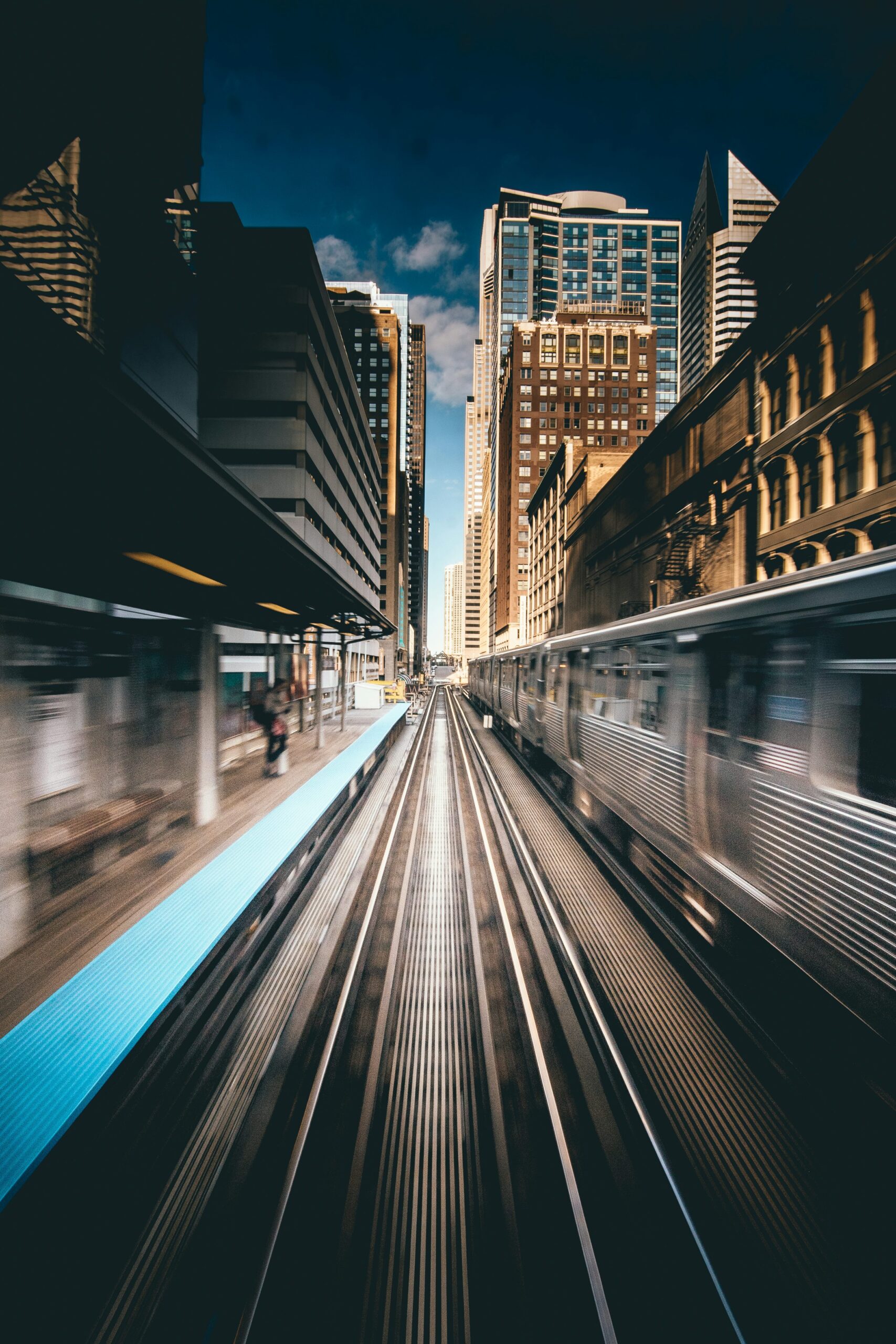
Why does speed compress reaction time so dramatically?
Urban systems move considerably faster than they used to. Vehicles accelerate more quickly. Trains run at much tighter intervals. Aircraft approach busy airports in rapid sequence with minimal separation. Digital communications and transactions happen essentially instantly. Speed fundamentally reduces the margin for error. When reaction windows shrink from seconds to fractions of seconds, safety can no longer depend on human response. It must depend on anticipation and automated systems that can react faster than people can. Rail signalling demonstrates this evolution clearly. Early railways relied on visual separation between trains and human judgment about safe distances. Operators could see the train ahead and judge whether they had enough space. Modern high-speed and high-frequency rail uses fully automated signaling systems to maintain safe separation at speeds and intervals that would be impossible with human oversight alone. Without this automation, you’d have to choose: either sharply reduce frequency, or accept much higher accident rates. There’s no third option at modern speeds and densities. The same fundamental logic applies to road safety. Modern junction design, carefully calibrated speed limits, and vehicle safety systems like automatic emergency braking all compensate for the reduced human reaction time that comes with higher speeds and traffic density. As speed increases, safety must become embedded in the physical and digital design of the system itself. You can’t rely on drivers reacting in time.
How does interaction density multiply risk in ways that aren’t obvious?
Interaction density measures how often different elements within a system affect each other. Cities maximise interaction density by fundamental design. That’s partly what makes them economically productive and culturally vibrant. But it also creates safety challenges that scale non-linearly. Consider a single person crossing a busy urban road. That person interacts with drivers in multiple lanes, cyclists sharing or crossing the road, traffic signals coordinating movement, and other pedestrians crossing simultaneously or waiting nearby. Each interaction carries some small risk. Now multiply that by thousands of crossings per hour at the same intersection, and the system must successfully absorb and manage constant micro-risks without letting any of them escalate into actual harm. High interaction density explains why small failures can cascade so quickly in urban environments. A single stalled vehicle blocks a traffic lane. Traffic backs up behind it within minutes. Emergency vehicles that might normally travel quickly get stuck in the congestion. Their response times to completely unrelated incidents elsewhere in the city increase. The initial incident itself stays relatively minor (one broken-down car) yet the secondary effects ripple outward and grows. This is why safety systems in dense environments often prioritise maintaining flow above almost everything else. Keeping things moving safely can matter more than eliminating every individual risk. A system with some residual risk but consistent flow often performs better overall than one that tries to eliminate all risk but creates bottlenecks that cascade into larger failures.
How do transport systems maintain safety under urban pressure?
Transport networks sit at the absolute centre of urban safety challenges. Roads, rail systems, and airspace all concentrate both speed and interaction density in ways that create constant risk that must be actively managed. Urban road safety increasingly relies on physical design rather than enforcement or expecting drivers to make good decisions. Engineers narrow lanes to slow traffic naturally. They raise crossings to make pedestrians more visible and reduce vehicle speed. They create physically protected cycle paths that eliminate the most dangerous conflicts between bikes and larger vehicles. Cameras and sensors enforce consistency in ways that human traffic police never could at scale. The design shapes behaviour automatically rather than depending on people choosing to behave safely. Rail safety prioritises separation and predictability above flexibility. Platform screen doors physically prevent people from falling or jumping onto tracks. Automated braking systems override human operators if trains get too close together or approach stations too fast. Centralised control rooms monitor entire networks in real-time and can intervene when they detect problems developing. These systems manage dense passenger flows in ways that would be impossible with purely human oversight. Airspace safety faces similar intense pressure in different forms. Busy airports coordinate hundreds of takeoffs and landings per hour, often on intersecting runways with aircraft of vastly different size and speeds. Air traffic control prioritises maintaining safe separation between aircraft above everything else, including punctuality and airline preferences. When capacity gets tight, delays protect safety. The system accepts that flights will be late rather than risk reducing separation standards. Across all transport modes, you see the same pattern. Once you approach capacity thresholds, safety systems favor reliability and predictability over raw speed or throughput. Better to move slightly slower but consistently than to push for maximum speed and risk catastrophic failures that shut everything down. 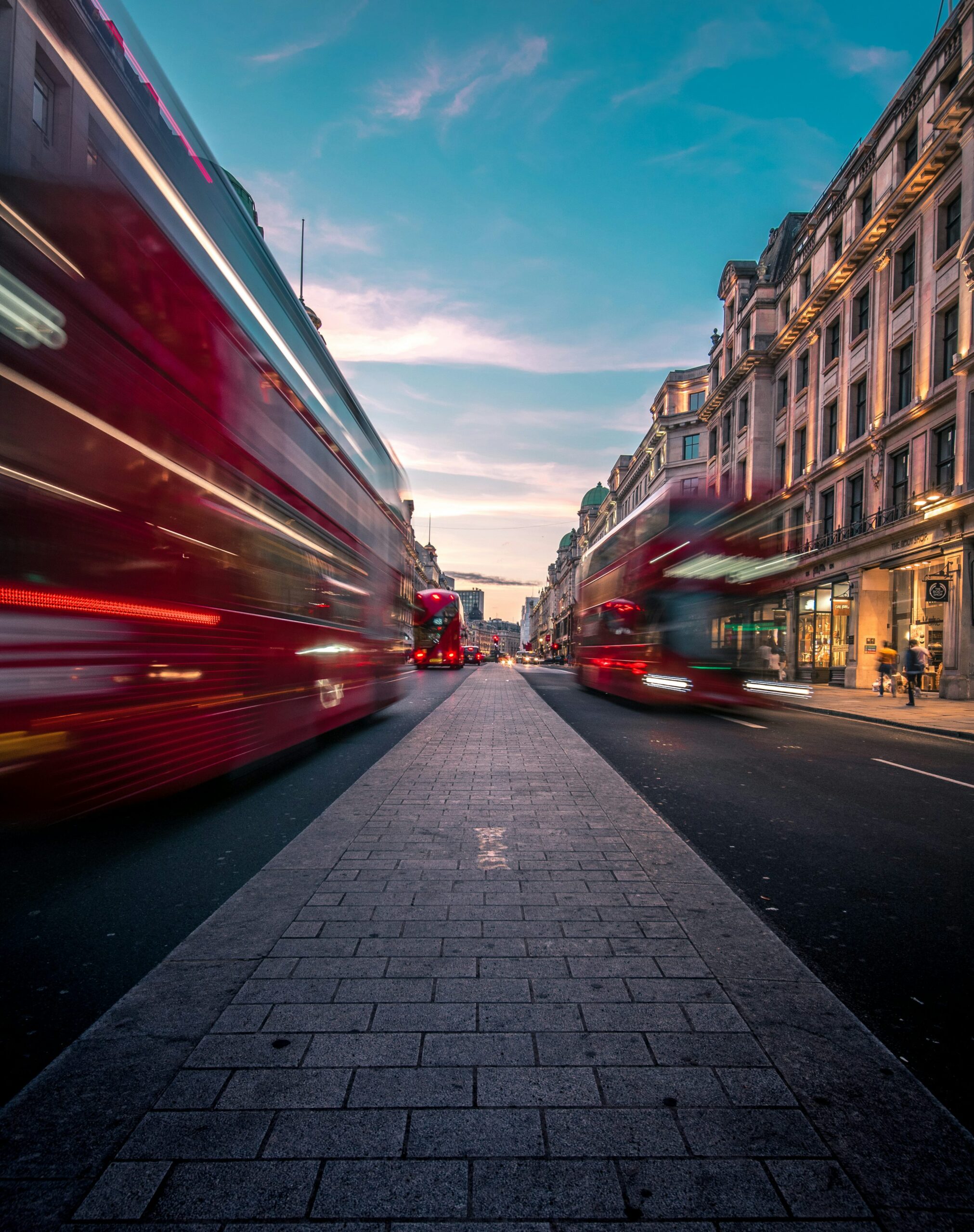
Why does layered urban infrastructure create hidden safety challenges?
Urban infrastructure doesn’t just spread horizontally, it stacks vertically and interweaves in complex ways. Utility networks for water, gas, electricity, and data run beneath streets in overlapping corridors. Buildings tower dozens of stories above those streets, with wireless networks, power grids, and surveillance systems overlay the physical infrastructure in ways that are mostly invisible but completely critical. This layering dramatically increases dependency and creates failure modes that aren’t immediately obvious. A power outage doesn’t just turn off lights. It stops elevators, disables traffic signals, cuts off communications systems, and shuts down the pumps that maintain water pressure. A water main break doesn’t just flood streets. It can disrupt hospital operations, prevent fire suppression systems from working, and contaminate the water supply if pressure drops too low and allows back-flow. Safety systems respond to this complexity by adding redundancy and continuous monitoring. Sensors track electrical load, water pressure, structural stress, and network performance constantly. Control rooms coordinate responses across different infrastructure owners and operators. Maintenance schedules get tighter because small problems can cascade faster and wider than they would in simpler systems. Yet all this layering also increases fragility in some ways. Repairs and upgrades require coordination across multiple organisations with different priorities and budgets. Physical access to underground infrastructure becomes harder as more utilities share the same limited space. When something does break, restoration time grows because you have to work around or temporarily relocate other systems. The interdependencies that make cities function efficiently also make them harder to repair when something fails.
How do emergency services operate under constant load?
In dense cities, emergency services operate near their baseline capacity almost continuously. They’re not waiting for emergencies to happen, they’re managing ongoing demand while trying to maintain some surge capacity for when things get worse. The entire response model shifts from ensuring availability to sophisticated prioritisation. Dispatch systems don’t just send the nearest available unit. They constantly rank incoming calls, predict where demand will spike next, and reposition resources dynamically. Coverage becomes probabilistic rather than guaranteed. You can’t promise that an ambulance will always arrive within eight minutes, but people will accept a system that it happens most of the time for the most serious cases. Urban fire services focus heavily on prevention and early containment rather than just fighting large fires. Modern building codes, mandatory sprinkler systems, and fire-resistant compartmentation all aim to stop small fires from becoming building-threatening or life-threatening ones. The strategy accepts that fires will start but invests heavily in ensuring they stay small and contained long enough for professional response to arrive. Medical emergency response in cities prioritises proximity and distributed capacity over centralised excellence. Cities rely on many smaller emergency facilities and ambulance stations rather than a few large hospitals. In dense urban environments, travel time through congested streets often determines patient outcomes more than the absolute quality of treatment. Getting adequate care quickly beats getting optimal care slowly.
Why does automation become a safety requirement, not just an efficiency tool?
At high population density and interaction speeds, automation stops being optional or just about saving money. Human operators simply cannot process the volume of information and decisions that dense urban systems generate. The cognitive load exceeds human capacity. Traffic control systems use adaptive signals that respond to real-time flow data in ways human operators never could. Rail systems rely on automatic train protection that can brake trains faster than any human driver could react. Airspace management uses sophisticated conflict detection algorithms that can spot developing problems minutes before they become critical. Modern buildings use automated fire suppression, elevator controls, and HVAC management that respond to sensor data continuously. Automation significantly reduces the frequency of errors caused by human inattention, fatigue, or misjudgment. But it also introduces completely new categories of risk. Software faults can affect thousands of systems simultaneously rather than causing isolated failures. Cyber security becomes safety-critical because malicious actors can potentially manipulate the automated systems that keep cities safe. A hacked traffic control system or compromised rail signaling could cause massive harm. Safety systems respond by adding new oversight layers. Humans monitor the machines that monitor the physical environment. Responsibility shifts from taking direct action to supervising automated systems and intervening when they behave unexpectedly. This creates a different kind of expertise requirement—operators need to understand both the physical systems and the automation layer, and they need to stay alert even when the automation handles everything correctly 99.9% of the time. 
When do safety systems trade coverage for control?
As density increases and systems approach their capacity limits, safety managers often face a difficult choice: try to maintain coverage everywhere and risk losing control, or narrow the scope to maintain tight control over a reduced area or service. You see this pattern repeatedly across different systems. Transport operators reduce service frequency during disruptions because running fewer trains or buses more reliably is safer than trying to maintain the full schedule and creating unpredictable gaps and bunching. Emergency services tighten their definitions of which call categories they’ll respond to immediately versus which can wait. City authorities close public spaces or restrict access during major events to prevent crowd-related risks they can’t manage safely at full capacity. These choices protect the core system and the people using it. They can also reduce perceived safety and actual access for individuals who fall outside the narrowed scope. Someone who needs emergency help for a category that’s been deprioritised experiences this as the system failing them, even though the decision was made to protect overall system function. This tension reflects physical and cognitive limits rather than policy failure or not caring. There’s a real threshold beyond which trying to do everything means doing nothing well. The question becomes whether it’s better to serve everyone poorly or serve the highest priorities well and others less well.
What signals show that density is overwhelming safety mechanisms?
Certain warning signals tend to appear before major safety incidents or system failures. Learning to recognise them can help stewards intervene before problems become crises. Minor disruptions start propagating further than they used to. What once affected one street corner now backs up traffic for several blocks. What once delayed a handful of trains now cascades across an entire line. The system’s ability to absorb and isolate small problems is degrading. Response times lengthen slightly but persistently. Not dramatically enough to trigger official threshold breaches, but consistently enough that the trend is clear when you look at the data over months rather than days. The system is operating closer to its limits with less spare capacity to respond quickly. Temporary closures and restrictions become routine rather than exceptional. Roads get closed for events or maintenance more often. Public spaces restrict access more frequently. Service reductions that were supposed to be temporary become semi-permanent. The system is managing exposure and load rather than providing full service. Maintenance windows shrink and get harder to schedule. There’s less opportunity to take systems offline for preventive work because demand never drops enough to create safe windows. Deferred maintenance starts accumulating because there’s literally no time to do it without disrupting operations. Public messaging starts emphasising personal responsibility and behaviour change more heavily. Authorities increasingly ask users to avoid peak times, plan alternative routes, or manage their own risk rather than promising the system will accommodate everyone safely. This shift suggests the system is reaching the limits of what it can actively manage and is trying to reduce demand rather than increase capacity. These signals don’t mean imminent collapse. They suggest the system is managing exposure rather than eliminating it, and operating with less margin for error than it once had.
How should long-term stewards think about safety in dense environments?
Stewardship in densely populated environments requires focusing on margins and resilience rather than dramatic interventions or silver-bullet solutions. Small improvements in separation, signalling, or response time can deliver surprisingly large safety gains in dense systems because the improvements get multiplied across millions of interactions. Adding a few seconds of buffer in rail signalling might seem trivial, but across thousands of train movements per day it significantly reduces cascade risk. Slightly faster emergency response times can prevent incidents from escalating in ways that have major downstream effects. Investing in redundancy pays dividends that are hard to measure until they’re needed. Redundant power systems, resilient communications networks, and simple, understandable designs all reduce cascade risk. When one thing fails, you want multiple independent backups that don’t depend on the same infrastructure or assumptions. Complexity creates efficiency until something breaks, then it creates catastrophe. For a principle-led family office or long-term institutional steward, this perspective should inform capital allocation decisions. Safety systems rarely produce rapid financial returns. They’re not exciting investments. But they preserve social trust, operational continuity, and the social license that allows dense urban systems to function. When trust in safety systems erodes, people change behavior in ways that can destabilise entire cities—they stop using public transport, they leave urban cores, they demand political changes that can be destabilising. Good faith matters especially in this context. Urban safety systems exist because generations of people built them to protect life under real constraints. They made trade-offs based on the technology, resources, and knowledge available to them. Current density levels are exposing the limits of those designs, but that reflects changed circumstances rather than original intent or incompetence. Understanding this helps stewards respond with thoughtful improvements rather than blame or panic. Future observations will examine how technology adoption interacts with these density constraints, and why some societies seem to absorb and manage density more successfully than others. The underlying pattern will remain consistent. Safety systems reveal their true priorities and design limits through how they manage the interaction between speed, density, and scale. Watching those interactions carefully tells you what’s actually working and where the next stress points will appear.