



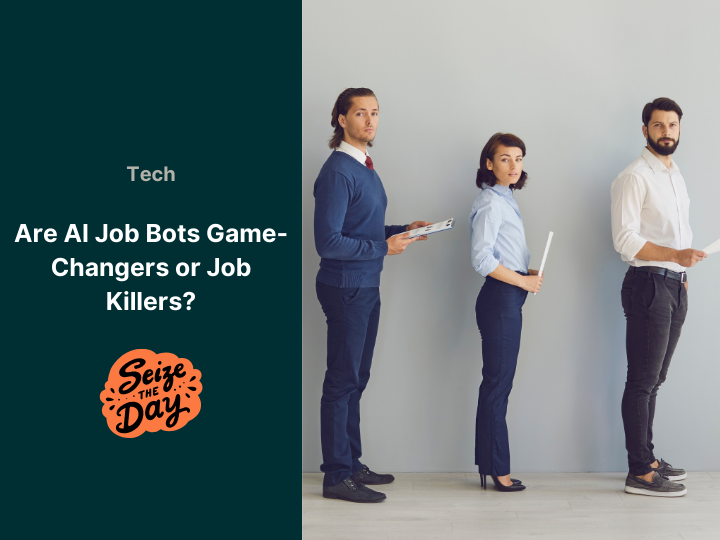
The job market is evolving, and artificial intelligence (AI) is at the heart of this transformation. Imagine a bot applying for 1,000 jobs in an hour—impressive, right? But is it fair? And how does it impact the job market as a whole? AI is changing how job seekers apply and how companies filter candidates. With great power comes great responsibility. In this blog, we’ll explore how AI job bots are reshaping the job market and how both job seekers and employers can navigate this new landscape ethically.
How AI Job Bots Are Shaping the Job Market
Gone are the days of spending hours customising each job application. AI-driven bots now automate the process, allowing job seekers to apply for hundreds—or even thousands—of roles with a single click. These bots scrape job postings, tailor resumes using keywords, and submit applications in record time. For job seekers, this seems like a golden ticket. More applications mean more chances, right? Not quite. The flood of mass applications creates new challenges. Hiring managers must sift through mountains of resumes, many of which are poorly matched or lack the human touch that makes an application stand out. 
Why Applying for Jobs Feels Harder Than Ever
Employers are overwhelmed by the sheer volume of applications. To cope, many are turning to Applicant Tracking Systems (ATS). These AI tools scan and filter resumes based on keywords and qualifications. While ATS saves time, it has its challenges. Candidates who don’t perfectly match the system’s criteria may be filtered out, even if they’re a great fit. Meanwhile, applicants who “game the system” by stuffing their resumes with keywords may slip through, even if they’re under qualified.  This combination of AI bots submitting applications en masse and ATS screening them out has created a hiring bottleneck. For many job seekers, getting a foot in the door feels harder than ever.
The Ethical Dilemma: Are AI Bots Fair?
With AI handling so much of the job application process, it’s important to ask: is this fair? From a job seeker’s perspective, AI bots seem like a tool for increasing visibility in a crowded job market. But are they levelling the playing field or just adding noise? Applying for hundreds of jobs with automation often comes at the cost of personalisation—a key factor employers value. For employers, relying too heavily on AI can lead to missed opportunities. While automation streamlines hiring, it can also filter out great candidates who don’t fit the algorithm’s exact criteria. Additionally, AI tools can introduce unintended biases, especially if programmed with narrow criteria.
How to Navigate the AI-Driven Job Market as a Job Seeker
Feeling overwhelmed by AI in the job market? Don’t worry—here are strategies to help you stand out and adapt. 
1. Customise Every Application, Be Human, Be Yourself!
Even with AI bots, it’s vital to tailor your application to each role. Employers appreciate candidates who take the time to customise their resumes and cover letters. This human touch can help you get past automated filters. Get creative—write something AI wouldn’t dare dream up. No, not just “I’m a real human… I promise!” Tools like Yoodli provide real-time feedback to improve your interview skills, giving you an edge in the hiring process.
2. Optimise, But Don’t Overdo It
Include relevant keywords in your resume to pass through ATS systems, but avoid keyword stuffing. Overloading your resume with irrelevant keywords may get you past the AI, but it won’t help you in the interview. Platforms like ZipRecruiter use AI to match job seekers with roles suited to their experience, offering smart dashboards and application tips.
3. Focus on Quality Over Quantity
AI bots make it tempting to apply to as many jobs as possible, but a shotgun approach rarely works. Research companies and focus on roles that align with your skills and interests. Platforms like FlexJobs offer vetted, flexible roles, ensuring your applications target legitimate opportunities that match your career goals.
4. Keep Networking
AI may dominate the application process, but human connections are still powerful. Network with professionals, attend job fairs, and reach out directly to hiring managers to bypass AI filters. Use platforms like Glassdoor to gain insights into potential employers, ensuring a better cultural fit before applying. 
What Employers Can Do to Stay Fair in an AI World
For employers, AI in hiring is a double-edged sword. Here’s how to use it responsibly:
1. Maintain Human Oversight
Even with AI tools, keep human recruiters involved in the hiring process. They can spot qualities AI might miss, such as cultural fit or unique experiences.
2. Audit Your AI Tools
Regularly review your ATS to ensure it’s not excluding qualified candidates. Adjust filters to be more inclusive, allowing candidates with diverse backgrounds to make it through.
3. Be Transparent
Let job seekers know AI is part of your hiring process. Transparency builds trust and allows candidates to optimise their applications fairly.
Adapting to the AI Era in Job Hunting
As AI reshapes the job market, both job seekers and employers must adapt. For applicants, this means staying smart, strategic, and ethical. For employers, it means balancing efficiency with fairness to ensure the best candidates don’t slip through the cracks. The job market may be more complex, but with the right approach, both sides can navigate this AI-driven world with integrity.