





This article continues our series examining how humanity builds, inherits, and preserves systems over time. It doesn’t argue for collective consciousness, digital transcendence, or engage in future speculation. Instead, it observes how human awareness actually behaves under conditions of scale, and why societies repeatedly confuse the growth of information with the expansion of actual lived experience. Modern technological systems scale faster and reach further than anything in any previous era of human history. Data volumes grow exponentially on a daily basis. Communication networks span entire continents and connect billions of devices. Coordination mechanisms can reach millions of people within seconds. Yet despite all this expansion of systems and information, human awareness remains stubbornly local, fundamentally bounded, and irreducibly singular to each individual. This tension between system scale and awareness limits sits quietly but powerfully inside many contemporary technological promises and visions. Claims about shared consciousness, multi-awareness, or emerging collective intelligence often rely on what amounts to a fundamental category error. They treat awareness as if it were a quantity that can scale and aggregate like data storage capacity or network bandwidth. This article examines where scaling actually works in human systems, where it fundamentally fails despite our wishes, and why individual awareness resists aggregation and merging even as the systems and networks around it expand to unprecedented size and complexity.
What do we actually mean by awareness and why does it matter?
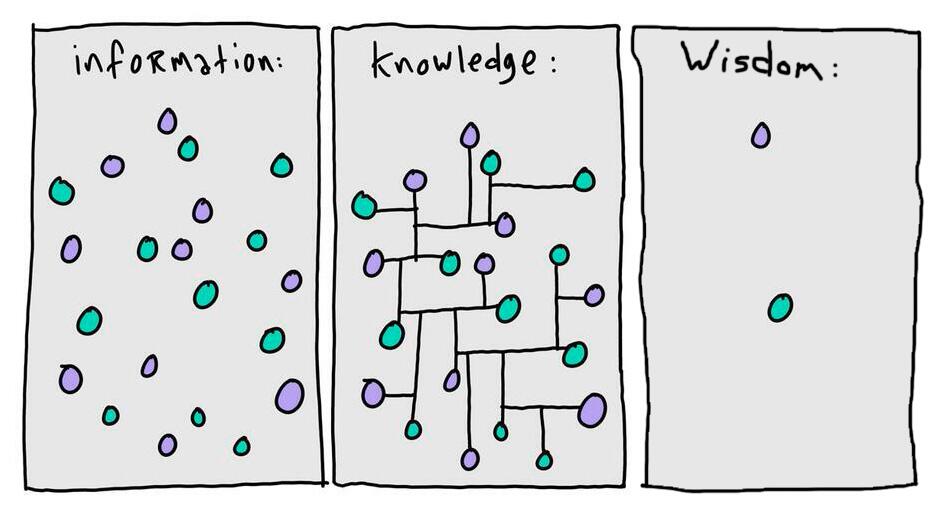
When we talk about awareness in the context of human experience, we’re referring specifically to subjective experience itself. This includes conscious perception of the world, the direction of attention toward specific things, and the internal sense of reference or perspective that makes experience personal. Each instance of awareness exists entirely inside one individual nervous system and cannot be separated from it. Awareness differs fundamentally from information in ways that matter enormously for understanding what can and cannot scale. Information can be stored in external media, transmitted across distances and through different carriers, and duplicated perfectly with no loss. Awareness cannot detach from its biological carrier (as we know currently). You can copy information about an experience, but you cannot copy or transfer the experience itself. Contemporary neuroscience strongly supports this critical distinction. While brain signals and neural activity correlate reliably with reported conscious awareness, and we can measure and map those correlations with increasing precision, we yet to. find any evidence suggesting that subjective experience exists or can exist outside individual biological cognition. Consciousness appears to be fundamentally tied to specific indivisual systems rather than being something that can be extracted, transferred, or merged. As human societies scale up to billions of people and create coordination systems of unprecedented complexity, this fundamental constraint on awareness remains completely fixed. We can build systems that amplify signals across the globe, coordinate actions across millions of participants, and process information at speeds and volumes that would have seemed magical to previous generations. Yet none of this expansion has allowed us to merge individual experiences or create genuinely shared awareness. This biological limitation on awareness fundamentally shapes every large organisation, communication network, and social institution we build. Understanding it prevents costly mistakes in system design. 
What actually scales easily and what doesn’t?
Information scales remarkably well through storage and transmission technologies. Written language allowed memory and knowledge to persist beyond individual human lifespans for the first time. Printing technology enabled mass replication of information at costs that made widespread literacy economically feasible. Digital systems now allow near-zero marginal cost duplication and global transmission of essentially unlimited information. Patterns and abstractions also scale effectively through symbolic representation. Mathematics, formal symbols, and computer code compress complex reality into compact, transferable structures that can be learned, shared, and applied across vastly different contexts by people who never meet. Coordination of behaviour scales through protocols, rules, and incentive structures. Shared schedules, standard procedures, common protocols, and aligned economic incentives allow millions of people to act coherently and cooperatively without requiring any shared direct experience or awareness of each other’s internal states. These three layers of scalable systems - information storage and transmission, abstract pattern representation, and behavioural coordination protocols - form the foundation of modern civilisation. They allow millions and now billions of people to act coherently and productively together without requiring shared consciousness or merged awareness. Air traffic control systems illustrate this scaling dynamic with perfect clarity. Thousands of flights coordinate safely across congested airspace every single day. No pilot shares awareness or direct experience with any other pilot. They don’t need to. Carefully designed protocols, standard procedures, and coordinating systems handle the alignment of behaviour without requiring merged consciousness. The system works precisely because it doesn’t depend on shared awareness.
Why does awareness fundamentally not scale the way systems do?
Individual awareness depends critically on attention, and attention remains stubbornly finite regardless of technological advancement. You can only pay attention to a limited number of things at once, and that limit is biological rather than technological. As information input volume grows, individual attention fragments across more sources. Cognitive load on decision-makers increases proportionally. The quality of decisions and depth of understanding typically drops as attention gets divided more thinly across more competing demands. Extensive psychological research consistently supports these limitations. Controlled studies repeatedly show that attempted multitasking reduces both task performance and later recall of information. The human brain switches rapidly between tasks rather than genuinely processing multiple streams in parallel. What feels like simultaneous awareness is actually very fast sequential switching that creates an illusion of parallelism. Claims about multi-awareness or expanded consciousness through technology typically confuse switching speed with simultaneous experience. Being able to check multiple information streams rapidly doesn’t mean you’re actually aware of all of them at once. It means you’re fragmenting your limited attention across them. The flood of digital alerts, notifications, and information streams increases exposure to signals but doesn’t increase actual awareness or understanding. More often, it creates noise that obscures signal and reduces the quality of attention available for any single thing. More input doesn’t equal more or better awareness. Modern systems compensate for awareness limits through various filtering and delegation mechanisms. Algorithms prioritise and filter content to reduce information volume. Large businesses delegate different decisions to different people or departments. Organisational hierarchies exist specifically to absorb complexity and prevent it from overwhelming individual decision-makers. Each of these compensating solutions accepts and works within the same fundamental constraint, the speed of awareness. Individual awareness necessarily stays local and bounded. System design must respect that reality or else we are only pretending technology can overcome it. 
Why is collective awareness a myth rather than an emerging reality?
Terms like collective intelligence or group mind describe aggregate outcomes and emergent system behaviours, not actual shared subjective experience. This distinction is crucial but frequently missed in discussions of technology and consciousness. Financial markets display behaviours that look remarkably intelligent when analysed in aggregate, processing vast amounts of information and adjusting prices accordingly. Ant colonies adapt efficiently to changing conditions and solve complex optimisation problems through distributed action. Modern cities optimise resource flows and traffic patterns through millions of individual decisions. Yet in none of these genuinely share awareness or merge consciousness collectively. Individual behaviours aggregate and interact to produce system-level patterns that look intelligent or coordinated. But there’s no super-subjectivity, no collective experience happening. Each ant, each trader, each driver remains in their own separate awareness. This distinction between aggregate intelligent behaviour and actual shared consciousness matters for how we think about systems and assign responsibility. Treating systems or institutions as if they were conscious entities with their own awareness leads to serious misplaced trust and accountability gaps. Institutions and systems don’t feel consequences the way individuals do. Institutions don’t suffer, don’t experience regret, don’t feel the human costs of their failures. Only the individual people within and affected by those institutions actually experience consequences. Many systemic failures occur specifically when accountability dissolves into abstraction and nobody feels personally responsible because the system is supposedly making decisions. The 2008 financial crisis illustrates this risk to a T. Distributed decisions across thousands of actors in complex financial systems produced enormous systemic harm, yet responsibility fragmented to the point where almost nobody felt personally accountable for outcomes.
Why does the idea of shared consciousness keep returning?
Humans persistently search for unity, coherence, and continuity, especially when confronting the pressure that comes with thinking at unprecedented scale, i.e. the universe. As systems grow to sizes that dwarf individual human capacity to comprehend them, individuals understandably feel smaller, less significant, and less connected to the system design. Personal awareness can feel diluted or lost in massive systems where individual voices and experiences seem to matter less. Narratives promising shared consciousness, collective awareness, or merged identity offer powerful psychological reassurance in response to this scale-induced alienation. They promise a way to achieve coherence and unity without requiring loss of self or acceptance of fundamental limits. Each historical society expresses this recurring hope through whatever dominant technology and metaphors it has available. Ideas of spiritual unity and cosmic consciousness followed the scaling of religious institutions across empires. Concepts of mechanical unity and perfect social coordination followed industrialisation. Contemporary visions of digital consciousness, uploaded minds, and network awareness follow the rise of global digital communication networks. These psychological narratives reveal consistent human desires and psychological needs rather than describing actual expanding awareness capacities. Understanding them as expressions of internal system regulation helps to keep the focus on how consciousness works within our current understanding of reality. Systems must be designed to support, enhance, and protect individual humans rather than attempting to absorb or transcend them into some collective awareness soup. That design principle respects both human dignity and biological reality.

How do large organisations handle awareness limits operationally?
Large organisations implicitly recognise awareness limitations in how they actually structure themselves and operate, even when their rhetoric might suggest otherwise. They separate different roles and responsibilities explicitly. They strictly restrict the scope of decisions that any individual or small group can make. They enforce clear escalation paths so that issues move to appropriate levels rather than overwhelming frontline workers. Military command structures reflect this operational reality particularly clearly. Information flows upward through hierarchies in heavily filtered and summarised form rather than raw. Decisions flow downward simplified into actionable orders appropriate to each level rather than requiring full strategic understanding from every soldier. No military commander, regardless of rank or technology available, holds complete real-time situational awareness of everything happening in their area of responsibility. That would be cognitively impossible. Command and control systems exist specifically to manage this inherent gap between what’s happening and what any individual can be aware of. Organisational failures frequently occur when leaders mistakenly assume that having access to data equals having genuine understanding or awareness. The information exists somewhere in the system, but it could be that nobody’s awareness actually encompasses it in a way that enables good decisions. Recent high-profile incidents in aviation safety, healthcare delivery, and financial system stability consistently show this pattern. The relevant data existed in the system. Warning signals were present. But individual awareness didn’t align with the information in ways that enabled timely appropriate action. The gap between information availability and actual awareness proved catastrophic.
What does technology actually contribute if not expanded awareness?
Technology genuinely extends human reach and capability in numerous important ways, but it doesn’t expand the fundamental subjective capacity for awareness. Digital tools dramatically improve sensing capabilities, allowing detection of signals far beyond human sensory ranges. They enhance memory through reliable storage and retrieval. They improve coordination across distance and time. They reduce latency in communication and decision cycles. They increase accuracy in measurement and calculation. What technology cannot do is expand the subjective capacity for awareness itself. You can’t pay attention to more things simultaneously just because you have better tools. The biological bottleneck remains. (Your are only in one place at one time) System design succeeds when it respects and works within this boundary rather than trying to overcome it. Effective dashboards summarise complex data into formats that fit human attention limits. Smart alert systems prioritise notifications to prevent overload. Automation takes routine cognitive load off human operators so their limited attention can focus on situations requiring judgement. Design fails when it overwhelms users with information volume that exceeds their capacity to process meaningfully. Excessive metrics, dashboards with hundreds of indicators, and constant notification streams paralyse action rather than enabling it. More information becomes worse than less when it exceeds awareness capacity. Responsible system builders optimise explicitly for actual human cognitive limits rather than for some theoretical unlimited capacity that doesn’t exist. The goal is augmenting human capability within real constraints, not pretending those constraints don’t exist.
How can we design better awareness limit systems?
As human societies continue scaling further in population, technological capability, and system complexity, the demand for individual awareness grows rather than slows down. Continued population growth, expanding automation, and increasingly dense global networks all increase coordination demands and system complexity. The gap between system scale and individual comprehension widens steadily. Individual human awareness will not expand biologically to match these growing coordination demands, at least not on in the near future. That biological capacity is essentially fixed. (The speed of awareness). Durable, resilient systems must accept this reality as a fundamental design constraint rather than hoping technology will somehow overcome it. They need to decentralise execution so that decisions happen at scales individuals can actually grasp. They must localise accountability so responsibility stays with specific people who can actually be aware of consequences. They should preserve spaces for human judgement rather than attempting to fully automate away the human element. This approach aligns with genuine long-term system design rather than fantasies of total control through perfect awareness. It acknowledges that we’re building systems for actual humans with real limitations, not for imagined post-human collective consciousnesses. Understanding awareness limits prevents unrealistic expectations about what technology, governance structures, or cultural evolution can actually achieve. It keeps responsibility and accountability anchored where subjective experience actually exists, in individual human beings rather than abstract systems. This observation doesn’t argue against technological progress, social scaling, or system improvement. It clarifies the boundary conditions within which progress can remain stable, sustainable, and genuinely beneficial to the humans these systems supposedly serve. Working within real constraints produces more durable outcomes than pretending those constraints don’t exist.