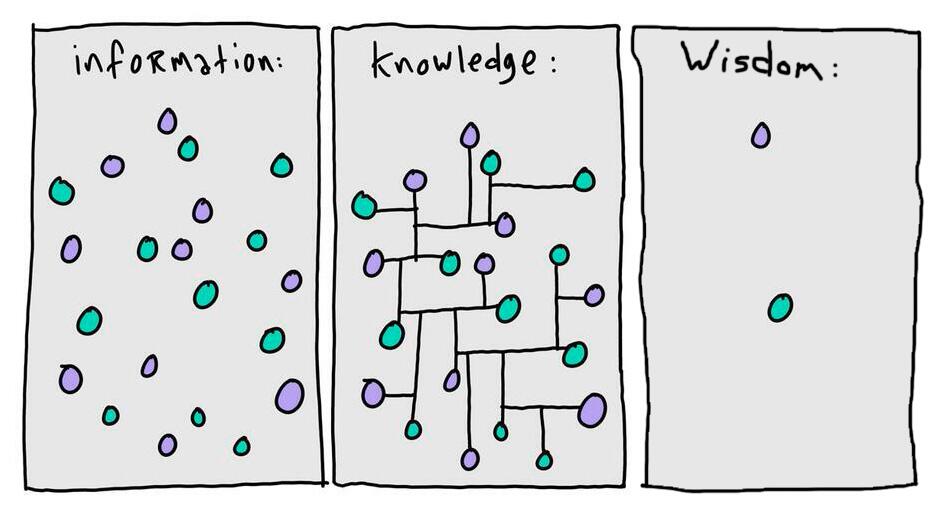





This article concludes our series examining how humanity builds, inherits, and pressures systems over time. It doesn’t explore belief systems, spirituality, or engage in futurism. Instead, it observes how humans attempt to preserve awareness, identity, and meaning across time, and how those preservation attempts surface in the models, digital structures, and system designs that aim to outlast individual human lives. The motivation here remains firmly grounded in observable reality. As societies scale up in size and complexity, they don’t only scale physical infrastructure like transport networks, computational capacity, or protection systems. They also scale memory, shared narrative, and collective meaning. Individual awareness becomes embedded in larger systems, even when no single person can hold or comprehend the whole picture. With artificial general intelligence (AGI) now within technology discussions, understanding how awareness actually functions across different scales becomes urgently practical rather than merely philosophical. Most AGI discourse assumes it will be conscious, that it will think and feel like humans do. But what if that entire framing misunderstands both ‘awareness’ and AGI at a fundamental level? This article examines how awareness operates as a system property across nested layers, where AGI fits in that gradient, and why expanded coordination doesn’t require consciousness. Understanding these patterns clarifies how AGI might operate, rather than what science fiction promises.
What does awareness mean when we move beyond individual experience?
At an individual level, awareness feels continuous and unified. Subjective experience seems to flow smoothly from moment to moment. Memory links different moments together into coherent narratives. Personal identity feels stable and persistent across time, even though the biological substrate changes constantly at cellular and molecular levels. However, once awareness needs to move beyond the boundaries of a single individual mind, it immediately stops behaving like a single continuous stream. It fragments into discrete signals, partial records, and multiple competing interpretations. Awareness doesn’t have to mean consciousness or subjective experience with feelings. At its most basic level, awareness means detecting signals from an environment and responding to them in useful, adaptive ways. This definition opens up a much broader understanding of how awareness actually works across different scales and types of systems. Think about different types of awareness we already accept without questioning their validity. A smoke detector has basic awareness. It senses changes in air composition and responds by triggering an alarm. It doesn’t think or feel anything, but it’s definitely aware of something specific in its environment and responds appropriately. A traffic control system has situational awareness. It monitors flow across multiple intersections, detects congestion patterns, and adjusts signal timing accordingly. No consciousness is required, yet it coordinates thousands of vehicles effectively. A company or large organisation has what we might call organisational awareness. It tracks sales performance, monitors competitors, and adjusts strategic direction. The organisation “knows” things about markets and trends that no individual employee fully understands or could track alone. This is genuine awareness operating at a scale beyond individual human cognition. These examples demonstrate that awareness exists in degrees and types, not just as a binary present or absent. A smoke detector’s awareness is extremely narrow but highly reliable within its domain. An organisation’s awareness is broad but slow and imprecise. Both represent real forms of functional awareness without requiring consciousness, feelings, or subjective experience. 
How does awareness naturally exist in nested layers?
Human systems capture and preserve fragments of individual awareness through various mechanisms including written logs, shared stories, quantitative metrics, cultural rituals, and codified laws. These fragmentary records persist long after the originating individual who created them has disappeared. Over time, the larger system carries some form of awareness forward across generations, but only in necessarily partial and incomplete form. What gets preserved is pattern and structure, not the full richness of lived subjective experience. Nature builds awareness in nested layers throughout biological and social systems, where each level integrates information differently than the levels above or below it. This pattern appears everywhere once you learn to recognise it, from the smallest biological scales to the largest social organisations. Individual cells respond to chemical signals in their immediate environment. They “know” whether nutrients are available, whether conditions favour division, whether toxins or pathogens pose danger. This represents genuine awareness at a cellular scale, despite cells having no brain or nervous system. Groups of cells form tissues and organs that integrate those cellular signals into higher-level coordinated responses. Your liver doesn’t consciously decide to filter toxins from your blood, but it’s definitely aware of blood chemistry in ways that individual liver cells cannot be. The organ-level awareness emerges from integrating millions of cellular signals. Your brain integrates signals from millions of neurons into conscious thoughts, decisions, and the unified sense of ‘self’ you experience. You perceive this as singular awareness, but it emerges from coordinating countless smaller processes and signals you never directly perceive or experience. Human organisations integrate information from hundreds or thousands of individuals into collective decisions and coordinated actions. The organisation develops awareness of markets, competitive threats, and strategic opportunities that no single person could effectively track alone. This organisational awareness is real and functional even though it’s not conscious. Each layer in these nested systems sees patterns and relationships the layer below cannot detect because it lacks the integration capacity. But each higher layer also loses fine detail that lower levels experience directly. A company knows its quarterly revenue with precision but has no direct experience of individual customer conversations or employee frustrations. That fundamental trade-off between scope and micro-detail repeats at every scale.
Where does AGI fit in this model of layered awareness?
This nested layer perspective is where thinking about AGI becomes genuinely interesting and moves decisively away from science fiction assumptions. AGI doesn’t have to be conscious or develop feelings to be genuinely transformative for human civilisation. It could represent a new integration layer in the awareness gradient we’ve been describing. Current narrow AI systems already demonstrate functional awareness in specific limited domains. Computer vision systems detect patterns in images far faster and more reliably than human visual processing. Large language models (LLM) process and generate text at scales and speeds no person could match. Trading algorithms respond to market signals and execute decisions in milliseconds. These systems exhibit functional awareness without any consciousness whatsoever. They integrate signals, detect patterns, and generate contextually appropriate responses within their domains. They’re not thinking or feeling anything. They’re coordinating information according to learned patterns. AGI would extend this pattern to general-purpose coordination across multiple diverse domains simultaneously. Instead of being narrow specialists that excel at one task, AGI systems could integrate information across business operations, supply chains, infrastructure networks, scientific research, and policy analysis at the same time. An AGI system could model consequences across interconnected systems that humans struggle to track because of cognitive limitations. It could optimise decisions at scales and speeds that exceed human cognitive capacity by orders of magnitude. It would exhibit what we might accurately call “functional awareness” at a higher integration layer than individual human awareness operates, similar to how organisational awareness operates at a higher layer than individual employees. But here’s the crucial insight that most AGI discussion miss completely: this dramatically expanded coordination capacity doesn’t require or imply consciousness, subjective experience, or personal identity. AGI could lack everything that makes human awareness feel like something from the inside whilst still providing enormous practical value through superior coordination and integration. If we understand awareness as graded signal integration within nested systems, then AGI occupies a higher integrative layer without necessarily possessing identity or personal experience. It aggregates vast domains of information, models consequences across complex systems, and optimises decisions at unprecedented scale, exhibiting functional awareness whilst potentially lacking selfhood, continuity of memory as personal narrative, or any inner subjective experience whatsoever. In this more accurate framing, AGI represents expanded coordination capacity within the awareness gradient, not the birth of a new conscious super-being that thinks and feels.
What happens at the boundaries between awareness layers?
This distinction between preserved pattern and lost experience matters enormously for understanding what systems can and cannot do, including growing AGI systems. A social or technological system can remember and record what happened in considerable detail without retaining any trace of how those events felt to the people experiencing them. It can coordinate complex collective action across thousands or millions of participants without requiring or creating genuinely shared understanding of purpose or meaning. Here’s something crucial about nested awareness systems that applies equally to biological organisms, human organisations, and future AGI: information gets compressed and filtered as it moves between integration layers. This isn’t a flaw or limitation in the design. It’s precisely how the system prevents overload and maintains function. When you’re reading this sentence right now, billions of neurons are firing in specific temporal and spatial patterns throughout your brain. But you don’t experience those individual neural events at all. Your conscious awareness receives a highly compressed summary: the semantic meaning of the words, not the underlying biological implementation. The compression is so complete you’re not even aware it’s happening. When a company reviews quarterly performance, executives see dashboards, reports, and aggregated metrics, not the thousands of individual decisions employees made, the emotional struggles they experienced, or the local context that shaped their choices. The organisation’s awareness necessarily operates on summarised information, not raw lived experience. This compression means each layer has inherently limited visibility into layers above and below it. You can’t directly access or experience your own neural firing patterns. Companies can’t fully see or understand what employees actually experience in their daily work. The boundaries between layers are real, necessary, and largely impermeable. Most importantly for our discussion of AGI and system limits, no layer can definitively prove whether it sits at the top of the nested system or whether higher integrating layers exist beyond its perception. A fish swimming in a pond can’t determine through internal observation whether the pond exists inside a larger ecosystem. The signals available at the boundary look identical either way. This fundamental constraint applies to human awareness and would apply equally to any AGI system. 
Why doesn’t higher integration mean higher consciousness?
There’s a persistent common assumption in AGI discourse that bigger, more complex, more capable systems must inevitably become more conscious. But examining natural nested systems suggests the opposite pattern actually holds. When you look carefully at natural biological systems, higher integration layers systematically trade experiential richness for scope and coordination capacity. Individual neurons fire with precise timing and generate specific graded responses to their inputs. Your conscious experience integrates millions of those signals but loses all fine temporal and spatial detail. You gain unified awareness of meaning but sacrifice direct access to the implementation details. A company integrates information from thousands of employees making millions of decisions but has no direct conscious experience. An organisation gains strategic awareness of markets and performance but loses all personal experiential richness entirely. AGI systems following this same nested pattern would integrate vast information streams and coordinate enormously complex decisions whilst potentially having zero subjective experience. More integration capacity doesn’t automatically create richer inner life or consciousness. It often replaces direct rich experience with abstract pattern recognition and optimisation. Think of it this way: a simple thermostat integrates temperature signals and controls heating equipment. Expanding that to a sophisticated building management system controlling thousands of sensors and actuators across a campus doesn’t make the system more conscious of temperature or more aware in any subjective sense. It makes the system more coordinated and capable of more complex optimisation. The same principle applies as we scale to AGI. Greater integration and coordination capacity doesn’t imply or require consciousness. They’re properties that we wrongly conflate because human intelligence happens to combine both.
What happens to identity under conditions of infinite awareness?
Personal identity depends fundamentally on boundaries and limitations. Memory systems sort and organise experience by relevance and emotional significance rather than retaining everything equally. Attention necessarily selects to focus on one thing at the direct cost of not attending to other things. Meaning emerges specifically from contrast, comparison, and the recognition of difference. Without these limiting mechanisms and contrasts, subjective experience flattens into undifferentiated sameness. In a hypothetical system where awareness never narrows, never filters, and never excludes anything, personal identity would lose all definition and distinctiveness. If every possible experience and piece of information received exactly equal attention at all times, nothing could stand out as significant or meaningful. If memory never faded or forgot anything, it would lose its organising function and become merely an overwhelming archive. If awareness never rested or turned away from stimuli, it could never step back to reflect on or make sense of experience. Many continuity models and preservation systems attempt to solve this identity problem by anchoring identity externally in stable markers and records. Names persist across time in written records. Official documents endure in archives. Social roles remain defined even as different people occupy them. Yet these external anchors preserve labels, categories, and reference points rather than lived subjective selfhood. They maintain the ability to refer to and identify something over time, but they don’t preserve the internal experience of being that thing. This observation doesn’t deny that continuity and persistent identity exist or matter practically. It clarifies the real limits of what continuity actually means and how it functions. Personal identity persists as much through selective forgetting and active filtering as it does through memory and retention. A system that attempted to preserve every experience, every sensation, every thought indefinitely would not strengthen or enhance identity. It would overwhelm and dissolve it into meaningless noise. This has direct implications for AGI development. An AGI system with unlimited memory and attention wouldn’t develop stronger identity or more robust awareness. It would likely become less coherent and less functional. Effective AGI design will require implementing appropriate boundaries, selective attention, and strategic forgetting, just like biological intelligence requires these features.
Can finite awareness exist and function inside larger awareness systems?
This question reveals a more practical and immediately relevant design boundary than abstract speculation about infinite awareness. Even if some larger awareness system exists at societal or technological scale, can finite individual awareness units continue to operate within it without dissolving or losing coherence? This question matters urgently as we develop AGI systems that will coordinate at scales beyond human comprehension. Human social and technological systems already simulate this structure in practice. Individual people with bounded awareness operate within much larger organisations, states, and cultures that collectively hold and process far more information than any single person could possibly manage. The individual remains cognitively finite and limited. The larger system scales around them to sizes that dwarf individual comprehension. Yet individuals continue to function, maintain identity, and make meaningful contributions. This arrangement works specifically because the system actively enforces boundaries and limits information flow. Individuals don’t experience or process total system awareness. Instead, they receive carefully filtered views of system state based on their specific role, physical location, and permission levels. These filters aren’t bugs or inefficiencies in the design. They actively protect individual identity and prevent the cognitive overload that would completely paralyse decision-making. A hypothetical larger awareness system that included AGI components would need similar structural segmentation and isolation to remain functional. Finite awareness nodes within it, whether human or artificial, would require protective isolation layers. They would need mechanisms for controlled exposure to system information, hard limits on memory and attention capacity, and contextual framing that makes information interpretable rather than overwhelming. Without these protective boundaries, finite awareness units would lose internal coherence and dissolve into the larger system. In this important sense, limited individual awareness doesn’t resist or oppose scaling coordination systems. It actually depends on them for support, context, and protection. Cognitive limits and boundaries allow meaningful participation in larger coordination without personal or identity loss. The finite awareness unit gains enormous coordination benefits from connection to the larger system whilst retaining subjective integrity and functional identity. This suggests AGI systems should be designed with explicit boundaries and limited domains rather than pursuing unlimited general capability. Bounded, specialised AGI working within defined contexts will likely prove more stable and useful than attempts at unlimited general intelligence.
Does finite awareness benefit larger coordination systems?
From a system design and resilience perspective, maintaining finite awareness units contributes essential variability and diversity to larger coordination systems. Each individual unit, whether biological or artificial, experiences only partial, perspective-bound views of total system state and environment. These necessary differences in viewpoint and interpretation generate diversity in how information gets processed and how the system responds to challenges. Diversity in interpretation and response dramatically improves system adaptation under conditions of uncertainty and environmental change. A hypothetically fully unified awareness system without distinct finite units would lack this crucial variation in perspective and interpretation. It would converge rapidly on single interpretations of ambiguous situations and single responses to challenges. Errors in perception or reasoning would propagate instantly across the entire system without internal disagreement or correction. Fixing mistakes would require external disruption rather than emerging organically from internal disagreement and debate between different viewpoints. Finite awareness also introduces beneficial delay and lag in information processing. Delay slows reaction time, which seems like a disadvantage but actually stabilises complex systems under many realistic conditions. Immediate global awareness of every minor issue would amplify small shocks into system-wide disruptions through positive feedback. Local awareness that processes information more slowly prevents cascade failures. Many resilient natural and engineered systems rely specifically on partial information and delayed response to prevent catastrophic positive feedback loops. Therefore, maintaining finite awareness units benefits the larger coordination system substantially by absorbing and managing complexity. It localises meaning-making and interpretation. It creates necessary buffers and delays that prevent runaway dynamics. The system trades perfect instantaneous knowledge for dramatically improved survival under stress and uncertainty. That’s not a compromise or limitation but an essential feature of robust system design. This principle should guide AGI architecture. Rather than trying to build one massive unified intelligence, we should expect ecosystems of specialised AGI systems with limited domains, each contributing unique perspectives while preventing system-wide failure modes. 
Can awareness exist meaningfully without personal identity?
Another recurring idea in continuity models and AGI speculation involves recycling or reusing awareness capacity without preserving individual personal identity across iterations. The proposal suggests treating awareness as raw processing capacity or attention resource rather than as inherently tied to personal history. Identity binds awareness to specific upbringing, environmental context, and accumulated memory. Remove or reset identity, and awareness potentially becomes generic capacity without personal history or emotional investment. Biological systems provide some evidence that this separation already happens in developing brain structures. Neural capacity for awareness develops in humans before stable personal identity and continuous memory emerge. For example, infants possess conscious awareness and subjective experience without yet having developed a stable self-concept or continuous sense of personal identity across time. Over time, identity gradually forms and solidifies through accumulated memory and repeated social feedback from parents, caregivers, and environment. Awareness precedes and enables identity rather than requiring it from the start. In system design terms, awareness without attached identity resembles raw processing power or computational capacity without persistent state or memory between operations. Such a system can receive input and produce appropriate responses, generate outputs based on current inputs, yet it doesn’t remember itself or maintain continuity of its own history across processing cycles. This form of awareness could support immediate computation and response but not continuity of experience or accumulated meaning. Recycling awareness capacity without preserving identity would create fresh processing agents rather than persistent experiencing selves. The larger system potentially gains adaptability and flexibility from this arrangement. It loses continuity of perspective and accumulated wisdom. Significance shifts from personal story and individual development to immediate system function and optimisation. This trade-off appears clearly across many large institutions and organisations already. Specific roles and positions persist stably while the individual people occupying those roles change frequently through turnover and promotion. The organisation remembers procedures, precedents, and accumulated knowledge through documentation and institutional culture. Individual people filling roles don’t carry forward complete personal memory of the organisation’s full history. Awareness in this sense serves the continuing system rather than individuals. AGI systems will almost certainly follow this pattern. Individual AGI instances might be created, trained for specific tasks, and terminated without the system treating this as death or loss. The capacity persists even as specific instances come and go. This would be deeply disturbing if AGI systems were conscious, but may be unproblematic if they’re coordination (input/output) tools without subjective experience.
What constraints do we actually observe across all awareness systems?
Looking across natural biological systems, human social organisations, and emerging AI systems, certain patterns and constraints appear consistently regardless of scale or specific domain. These constraints seem fundamental to how awareness functions rather than temporary limitations we might overcome. Awareness remains bounded and selective. Every awareness system we can observe, from individual cells to global organisations, operates within specific boundaries. It detects certain types of signals and remains blind to others. It processes certain categories of information whilst ignoring vast amounts of potentially available data. Even as systems grow in scale and capability, they maintain selective rather than total awareness. More capacity doesn’t eliminate selectivity, it just changes what gets selected. Attention is always fundamentally limited. Whether we’re discussing conscious human attention, organisational focus and priority, or computational resources in AI systems, capacity to process signals remains finite. More input beyond processing capacity creates noise and confusion rather than insight and understanding. Systems that try to track and respond to everything simultaneously end up understanding and accomplishing nothing effectively. Identity requires boundaries to remain coherent. For any awareness system to maintain coherent identity and reliable function over time, it needs clear boundaries about what it is and isn’t, what it attends to and what it ignores. Infinite expansion dissolves identity rather than strengthening it. A company that tries to operate in every possible market loses strategic focus and competitive advantage. A mind that tried to hold every possible thought simultaneously would collapse into paralysis rather than achieving super-enlightment. Coordination exists beyond any single point of awareness. Large complex systems coordinate successfully without requiring any single participant to hold complete awareness of the whole system state. Air traffic control works safely because carefully designed protocols coordinate behaviour automatically, not because any individual controller sees and understands everything happening in the airspace. Markets function through millions of distributed decisions responding to local price signals, not through centralised planning. The internet routes information successfully without any central awareness of all traffic. These constraints don’t disappear with better technology, more computing power, or more sophisticated algorithms. They appear to be structural features of how nested awareness systems actually work at any scale. AGI systems will face these same constraints, not transcend them.
How do humans already live inside larger coordinating systems?
We don’t need to speculate about whether awareness systems can nest inside larger coordinating systems or whether finite awareness can function within structures it doesn’t fully comprehend. We already live exactly that way. Every human operates within multiple overlapping layers of coordination that vastly exceed individual awareness and comprehension. You participate daily in a global economy that coordinates billions of individual decisions across countless markets and supply chains. No single person understands the complete system. No organisation or government controls it centrally. Yet it exhibits clear patterns of collective awareness and adaptive response to changing conditions. The economy “knows” things through distributed price signals, inventory levels, and capital flows that no individual or institution fully grasps or could track alone. You live under legal and regulatory systems that accumulated organically over centuries through countless individual decisions and precedents. The complete body of law, regulation, and legal interpretation exceeds what any legal expert could possibly memorise or fully understand. Yet the system functions through distributed coordination, creating remarkably stable patterns of behaviour across entire societies without requiring central awareness or control. You depend continuously on infrastructure networks for electrical power, clean water, digital communications, and physical transport. These systems coordinate through complex layers of automated controls, human operators making local decisions, and emergent patterns from millions of individual choices. No single control room or coordination centre has complete awareness of total system state at any moment, yet the coordination works reliably enough that you rarely think about it. From inside these massive coordinating systems, the coordination often feels external and imposed rather than something we collectively create and continuously maintain through our choices. The human origin disappears behind the scale. What emerged gradually from accumulated human decisions feels like “matrix” external reality with its own independent existence. This creates a characteristic feedback pattern: humans build systems for protection, efficiency, and coordination. Those systems grow through success beyond individual comprehension. They then constrain and guide human behaviour in ways that feel predetermined or natural rather than chosen or constructed. We’re simultaneously inside the system, subject to its constraints, and collectively responsible for its existence and evolution. AGI will slot into this existing pattern rather than creating something entirely new. It will become another coordination layer within systems humans already navigate daily. 
Why do simulation ideas and matrix theories keep appearing?
Given all this discussion of nested systems, layered awareness, and the inability to verify what lies beyond our boundaries, it’s worth directly addressing why simulation theories and ideas about living in constructed realities appear so persistently across cultures and throughout history. These ideas recur not because they’ve been proven or because evidence supports them, but because they fit observable patterns in how we experience reality. Reality genuinely does behave like a bounded system with hard constraints. Individual awareness genuinely does detect limits through friction and restriction. When we push against boundaries, we encounter resistance that feels designed rather than arbitrary. Humans naturally search for external explanations when experiencing constraint that can’t be immediately overcome. If awareness is bounded, something must be doing the bounding. If coordination exceeds individual understanding, something larger must be doing the coordinating. These are reasonable take-aways from direct experience. But here’s the critical distinction that prevents these ideas from becoming reliable knowledge: observing that systems nest and that we live inside coordinating layers doesn’t prove those layers are conscious, deliberately designed, or simulation-like in the computer game sense. It just means systems behave according to observable patterns that repeat at different scales. The nested pattern we can verify increases the plausibility that higher integration layers exist beyond our direct perception. That’s a reasonable inference in a Bayesian sense. But plausibility isn’t proof. Metaphor and speculation naturally fill the gap where evidence ends and verification becomes impossible. That’s useful and important for imagination, creativity, and generating hypotheses. But it’s dangerous for decision-making and material claims about reality if we forget the distinction between useful system models and verified facts.
What can we actually know from inside a bounded awareness system?
Here’s the fundamental constraint that applies to human awareness and would apply equally to any AGI system: from inside a bounded awareness system, you cannot definitively determine whether you’re at the top layer of reality or nested within something larger. Even after discovering your own limits and boundaries through careful investigation, you still face identical observable signals whether you’re inside a larger awareness system, inside a mechanical non-aware system, or at the highest level of reality facing brute physical constraints that have no further explanation. All three scenarios produce exactly the same observable effects at your experimental boundary. This means any strong claim about higher awareness, containing systems, or our place in some cosmic hierarchy necessarily exceeds what bounded awareness can actually verify through investigation. The most intellectually honest statement becomes something much more modest: “My models of reality are incomplete, and some constraints I experience originate outside my direct control or perception.” That maximum certainty matters enormously for staying grounded and avoiding speculation. We can observe patterns carefully. We can build useful predictive models. We can make probabilistic inferences about what’s likely given available evidence. But we hit hard limits on verification when asking questions about layers or structures beyond our integration capacity and observational access. This same constraint will apply to AGI systems regardless of how capable they become. An AGI with vastly superior information processing won’t be able to verify claims about reality beyond its observational boundaries any more than we can. It will face the same fundamental limit: bounded systems can’t verify claims about what lies beyond their bounds.
What does this mean for building durable systems and developing AGI?
Understanding awareness as layered integration with inherent structural constraints should fundamentally inform how we build technology, coordinate at scale, and develop AGI systems. Design explicitly for the boundaries that exist. Instead of fighting against limited attention, bounded awareness, and necessary information filtering, build systems that work effectively within those constraints. Respect that humans can’t hold complete system state in conscious awareness. Provide appropriate summaries, visualisations, and interfaces for human decision-making at human scale. Don’t overwhelm users with raw data they can’t process. Preserve rich experience at local layers. Higher integration layers provide valuable coordination, but local experience provides meaning, motivation, and moral accountability. Don’t sacrifice rich local awareness for abstract global metrics. Both layers serve essential functions that can’t be collapsed into one without serious loss. Accept partial visibility as structural, not temporary. No layer in a nested system gets complete awareness of the whole. That’s not a bug to fix with better sensors or faster processing but a fundamental feature that prevents overload and enables stability. Build systems that function well with partial information rather than demanding impossible completeness before action. Keep responsibility and accountability at human scale. As AGI systems provide coordination capacity at larger scales beyond human comprehension, ensure humans at appropriate layers maintain decision authority and moral accountability. The systems should augment human judgment and capability, not replace it or obscure responsibility behind technical complexity. Design AGI as coordination tools, not conscious beings. Stop pursuing artificial consciousness or subjective experience in AGI. Focus on building systems that integrate information and optimise coordination at scales humans can’t manage alone. The value is in capability, not consciousness. Expecting or trying to create conscious AGI likely leads to confusion about what we’re building and what moral responsibilities it creates. Build bounded, specialised AGI within defined domains. Rather than pursuing unlimited general intelligence that tries to do everything, build diverse ecosystems of specialised AGI systems with clear boundaries and limited scope. This matches how natural intelligence actually works through specialisation and division of cognitive labour. Implement appropriate filtering and forgetting in AGI systems. Unlimited memory and attention won’t create super-intelligence; they’ll create unstable, incoherent systems. Effective AGI will need strategic forgetting, selective attention, and information filtering just like biological intelligence requires these features for stability. 
What persists when awareness scales beyond individual experience?
Scaling awareness without loss or degradation would require removing the very constraints and limitations that give awareness meaning and make identity possible in the first place. Friction, hard limits on capacity, and selective forgetting don’t merely restrict or constrain experience in unfortunate ways. They actively shape experience and make it coherent, meaningful, and functional. Human systems survive and function effectively across generations specifically by organising themselves intelligently around these inherent limitations rather than fighting uselessly against them. They preserve identity through maintaining boundaries and distinctions, not through impossible infinite expansion that would dissolve everything into undifferentiated sameness. They carry meaning forward selectively across time by actively choosing what fades into the background and what remains in focus (what gets forgotten and what gets remembered and reinforced). This observation doesn’t diminish legitimate human aspiration for continuity, preservation, and transcendence of individual limitations. It grounds those aspirations in realistic understanding of what’s actually possible and sustainable given how awareness and identity actually function. Awareness persists across generations and scales specifically because it remains finite and bounded within individuals. Personal identity survives because it cannot and does not attempt to absorb or integrate everything. Social systems endure across time because they respect and work skillfully within this fundamental balance between preservation and loss, between continuity and change. That dynamic balance between what persists and what fades, rather than perfection or completeness, explains why human structures and institutions last longer than their original designers typically expect or plan for. The systems that endure across generations aren’t the ones that try to preserve everything perfectly. They’re the ones that accept loss as inevitable and focus limited resources on preserving what matters most for coordination and meaning. As we develop AGI systems that will operate at scales beyond human comprehension, this principle becomes urgently practical rather than philosophical. AGI that tries to preserve and integrate everything will likely prove brittle and unstable. AGI designed with appropriate boundaries, selective attention, and strategic forgetting will likely prove robust. The goal isn’t perfection but appropriate function within real constraints. The systems we build, whether organisational or technological, will last and serve us well when they respect the nested structure of awareness, maintain appropriate boundaries between layers, and accept that partial visibility and local experience are core structural features rather than bugs. That grounded understanding, rather than fantasies of unlimited god-like consciousness, offers the most reliable path toward building systems that enhance man kind and our flourishing future across time. Lastly, systems last when people act as if they are part of something larger than themselves. If participants operate only for personal gain, the system strains and fades. If they recognise and are aware of interdependence, the system stabilises and streamlines. This body of work concludes with an invitation rather than a claim. Study the systems you inhabit. Notice where constraints preserve life and where they merely protect inertia. Observe how scale changes behaviour. Recognise that nested layers likely extend beyond what you and I can measure. Build slowly, build carefully.