





This article continues a series examining how humanity builds, inherits, and pressures systems over time. It does not argue for reform or predict outcomes. Instead, it observes systems that persist beyond their original purpose, system lag emerges, and how strain accumulates when reality changes faster than structure. For long-term stewards of technology and infrastructure, system lag is not an abstract concern. It actively shapes operational risk, capital allocation, and institutional trust. Durable systems stabilise societies, yet they also preserve assumptions that are out-dated. Understanding this tension matters more than reacting to symptoms. This piece looks into why systems last, how lag forms, and where durability quietly shifts from strength to liability. The goal remains observational. To identify mechanics before judgement.
How do systems earn trust and then become unchangeable?
Here’s the simple truth, we build systems to make life less chaotic. Laws, technical standards, protocols, institutions. These things let complete strangers coordinate and work together at massive scale. They give us shared language and expectations. Once they’re in place and working, they generate trust simply by existing and being consistent. People stop questioning them because they work well enough, reliably enough.  Take timekeeping for example. We’ve got global time zones, leap seconds, and atomic clocks. A whole elaborate system built to keep everyone synchronised. It’s not perfect (leap seconds are genuinely weird when you think about them), but it works well enough that we never seriously discuss replacing it. Why would we? Even tiny adjustments to how we measure time would require coordinating changes across every computer system, every flight schedule, every financial transaction on Earth. The coordination cost alone makes “good enough” feel like “perfect.” Financial accounting standards work the same way. They’re essentially agreements about how to measure value, assess risk, and report results. Are they the only possible way to do accounting? No. But companies rely on them to compare performance across industries. Investors trust them because they’re familiar. They know what the numbers mean, or at least want to see the numbers going up. Changing these standards carries enormous risk because the whole system depends on everyone using the same measuring stick. Even when we spot inefficiencies or outdated assumptions, the cost of transition often outweighs the benefit of improvement. All these examples create an interesting dynamic. The people who design foundational systems early on end up shaping our behaviour for generations. They solve problems for their era, but their solutions stick around long after the original context changes. Later generations directly inherit this stability, which is mostly good, but also inherit declining efficiency as the world moves forward and the system stays put. We get the benefit of predictability but pay the price in rigidity.
What happens when the world changes faster than your systems can adapt?
Systems fall behind when the world around them changes faster than they can adapt. It’s not usually one dramatic shift, it’s the accumulation of many : populations grow, technology advances, climate patterns change, cultural expectations evolve. The system that worked perfectly well a decade ago starts showing its age, not because it got worse, but because everything around it has changed. Transport infrastructure shows this pattern clearly. Think about roads designed in the 1960s and 70s, built for a world with fewer cars moving at moderate speeds. Those same roads now carry dense, high-speed traffic. Commuters rushing to work, delivery trucks constantly moving goods, or taxi drivers circling for passengers. Safety regulations update slowly, usually after accidents reveal problems. Congestion gets worse year after year. And when cities finally decide to expand capacity? The costs have ballooned because you’re now building around existing development, negotiating with more stakeholders, working within tighter environmental constraints. The gap between what the system can handle and what we’re asking it to handle just keeps growing. Digital systems experience the same pressure, just faster. The internet itself was designed in university labs where everyone basically played nice and the whole network could fit in a relatively small number of institutions. The designers assumed good faith, limited scale, and relatively simple use cases. Now? The internet supports billions of users, few of them actively hostile. Automated bots, state-sponsored attackers, ransomware operations. None of this was in the original threat model. We’ve responded by stacking security measures: firewalls, encryption layers, authentication systems, monitoring tools. But these are additions, so always playing catchup. Here’s the tricky part, lag rarely announces itself as catastrophic failure. It doesn’t usually break dramatically. Instead, it shows up as friction. Processes that used to be instant now require waiting. As workarounds, people create unofficial solutions simply because the official system can’t keep up. The system technically still works, but the experience gradually slows. Things that used to be smooth become clunky. Margins for error shrink, and everyone involved just adapts to the new normal of things being a bit worse than they used to be.
At what point does fixing a system become unthinkable?
For a long time, often decades, the cost of replacing a system exceeds the cost of living with its inefficiencies. Organisations and government ministers do the math, even if it’s informal: “Yes, this is annoying and slows us down, but starting over is expensive, risky, and disruptive.” So they tolerate the friction. They accept the workarounds. The familiar system, with all its quirks and limitations, feels safer than the uncertainty of an alternative they don’t fully understand yet.
Legal systems demonstrate this perfectly. Courts rely heavily on precedent (previous decisions guide current ones) specifically to preserve continuity and predictability. Legislators tweak rules incrementally, adjusting around the edges, because they’re terrified of unintended consequences. What if changing one regulation creates problems in five other areas nobody anticipated? So instead of fundamental changes, you get amendments, riders, exceptions, and clarifications. The framework stays largely unchanged, just progressively more complicated. True structural reform (questioning the foundational architecture itself) remains extraordinarily out of the realms of thought.
We’ve been observing tech businesses behaving in the exact the same way. Legacy platforms become the backbone of operations. On top of the old database, the original codebase, the monolithic application that’s been running for fifteen years. They add APIs to connect modern tools to old systems. They create middleware to translate between incompatible formats. They write wrapper functions to make legacy code behave. Almost nobody proposes rebuilding the core, because that sounds insane. Who has time for that? Who has budget? What if it goes wrong? So complexity accumulates.
And here’s what really locks this pattern in place: the bigger and more critical a system becomes, the less tolerance there is for experimentation. When you’re small, you can take risks. Break something? Fix it quickly, limited damage. But once a system supports thousands of users, generates significant revenue, or underpins critical operations, the calculus changes completely. The fear of disruption outweighs the desire for improvement. Every proposed change gets scrutinised for risk. Innovation slows. The safe choice is to keep the existing system running.
Why do systems look strongest right before they fail?
The most dangerous thing about a stable system is that it hides its weaknesses until something breaks. When a system runs smoothly for years, redundancy and habit paper over the cracks. Operators develop workarounds that become routine. Backup processes kick in automatically when the primary path stumbles. Performance slowly degrades, but nobody notices because the decline is gradual and the system still delivers (mostly, if not slightly slower). You only discover where the real weak points are when something unusual happens. A spike in demand, unusual weather, a supplier failure, or suddenly when the compensating mechanisms can’t keep up, and what looked solid reveals itself as barely holding together.
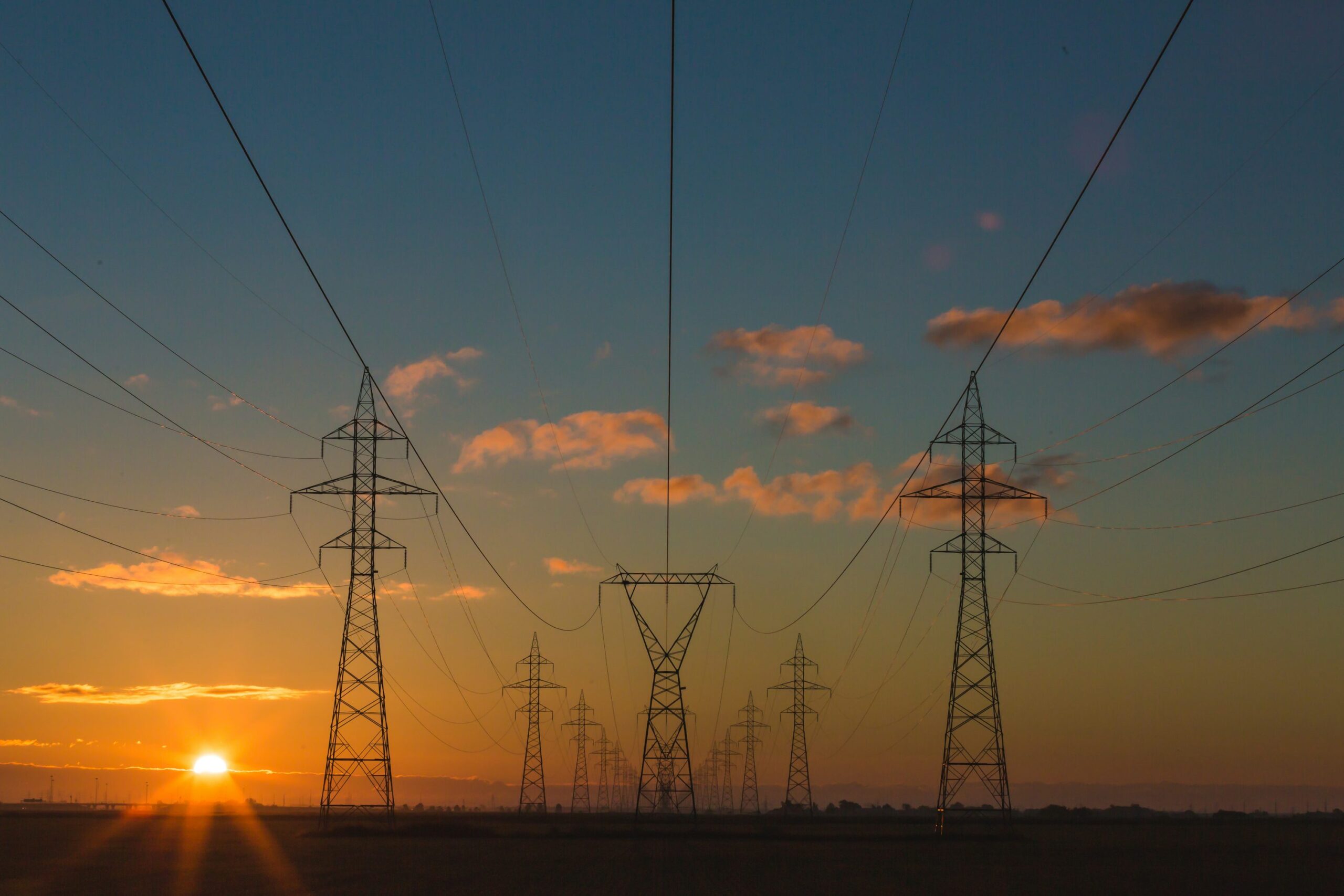
Power grids are the clear and brutal example. Many electrical grids are running on outdated infrastructure. They haven’t catastrophically failed because grid operators have become incredibly skilled at managing around the limitations. They monitor load constantly, shifting power flows manually when automated systems can’t respond fast enough. They schedule maintenance during low-demand periods. They’ve built up institutional knowledge about which components are temperamental and need watching. But then you get demand spiking beyond what the models predicted. The manual interventions that worked for normal operations can’t scale to the shock. Operators are making decisions every few minutes instead of every few hours. The ageing transformers that is “fine” with 80% capacity, starts overheating at 95%.
Performance doesn’t just degrade linearly ; it can collapse suddenly once you cross certain thresholds that nobody had properly mapped.
Then you get a rare event. Maybe it’s a cyber attack that takes out one of the redundant communication channels everyone assumed would never go down simultaneously. Maybe it’s a flash crash where algorithmic trading creates massive volatility in seconds. Maybe it’s a major institution failing and triggering a wave of margin calls. Suddenly the settlement delays that were always there, just hidden in the comfortable margins, become visible. Liquidity that seemed abundant evaporates because people no longer trust the reported positions anymore. The system is technically still functioning, but performance has degraded so severely that participants start pulling back, which makes the problem worse.
Here’s the paradox. Durability protects you brilliantly against frequent, predictable failures. Great at keeping the transformer keeps running and the operator’s manual workaround succeeds again. But each time the system survives through compensation rather than actual robustness, you’re increasing your exposure to the scenario that breaks all the compensating mechanisms at once. The longer a system runs without fundamental renewal, the more fragile it becomes to shocks outside its designed parameter. And the more catastrophic the failure when it finally comes.
Why does digitisation expose problems faster than it solves them?
Digital tools do two things simultaneously. They speed everything up, and they make everything visible. Processes that used to happen behind closed doors with manual approval, paper trails, and informal handoffs, now leave digital footprints of authorisation. This transparency is mostly good, but it exposes inefficiencies that were previously hidden or tolerated because nobody had clear data on how bad they actually were. The problem is that automation magnifies whatever design is already there. If your workflow was poorly designed when it was manual, automating it just means you’re now doing the wrong thing faster and at larger scale. A bottleneck that slowed down ten transactions a day now slows down a thousand. Bad handoffs that occasionally caused confusion now generate error reports constantly. Data dashboards highlight exactly where things are breaking, and users notice friction immediately because they’re comparing your system to the slick consumer apps they use every day.  Technology organisations typically respond by adding control layers. Compliance teams want audit trails, so they add logging. Security wants monitoring, so they add surveillance tools. Management wants reporting, so they build dashboards. Each addition is rational on its own terms. But the underlying workflow that’s causing the problems? That stays untouched, because changing it would require coordination across departments, retraining people, potentially disrupting operations during the transition. This approach preserves continuity, which matters. Systems keep running. People keep working and nothing breaks catastrophically. But you’re also deepening complexity with each layer. The original process is now wrapped in compliance checks, monitoring systems, and reporting requirements. New employees have to learn not just how to do the work, but how to navigate all the controls around it. Over time, the controls become as complex as the thing they’re controlling. Now that raises two problems.
What gets lost when the people who built it leave?
Over time, organisations forget why systems exist. Not all at once, it’s gradual. Someone retires who remembers the original problem. A regulation gets updated but the internal policy stays the same. Rules persist without rationale, and fear replaces understanding. Nobody wants to be the person who removed the safeguard that turned out to be important, even if nobody can explain what it’s safeguarding against anymore.
Staff turnover accelerates this effect dramatically. New operators inherit procedures without context—”Why does this form need three signatures?” “It just does.” The documentation that might explain the reasoning is outdated or assumes knowledge the current team doesn’t have. Exceptions accumulate over the years, each one made sense at the time, but now they’re just unexplained quirks people work around. The system works, but nobody fully understands why it works or what would break if you changed something.
This loss of memory strengthens inertia in a specific way. Teams avoid change not from stubbornness, but from rational fear of unknown consequences. Maybe nothing breaks. Maybe it breaks something critical that only activates quarterly. The risk feels unknowable, so the safe choice is to leave it alone. Eventually, durability stops relying on design and relies almost entirely on habit. The system persists not because it’s the best solution, but because it’s the known solution—sustained by collective adaptation rather than any inherent quality of the design itself.
What gets lost when the people who built it leave?
Lag differs across system types. Physical infrastructure adapts slowly—roads, power grids, and buildings carry high replacement costs and cause major disruption during transitions. Digital systems can adapt faster technically, but dependency often grows faster than the ability to manage it. Social systems lag differently altogether; cultural norms and expectations shift through generational change, not policy updates.
Economic systems reveal an interesting split. Markets adjust quickly to new information—prices move, capital flows, companies pivot. But regulation follows cautiously, deliberately lagging behind to assess impact before codifying rules. Both speeds serve a purpose, but the gap between them creates friction.
Understanding these different lag patterns helps stewards know where to pay attention. A six-month delay in updating digital infrastructure might be critical. The same six months in shifting cultural expectations is barely noticeable. Not all lag is equally urgent.
How should systems be stewarded through periods of lag?
Long-term stewardship accepts lag as inevitable. No system adapts perfectly to changing conditions. The goal isn’t optimisation, it’s resilience. Understanding where durability protects value versus where it hides accumulating risk becomes the central question.
Effective stewardship prioritises legibility above almost everything else. Clear ownership structures. Visible dependencies. Documented intent behind key decisions. These aren’t bureaucratic exercises—they’re investments that reduce the burden on future operators. When someone inherits a system fifteen years from now, legibility determines whether they can adapt it intelligently or just pile workarounds on top.
Lag doesn’t imply failure. It reflects success under earlier conditions. The system that’s struggling now probably worked brilliantly for decades. Recognizing this preserves respect for inherited decisions while enabling selective renewal. You’re not fixing mistakes, you’re adapting good solutions to changed circumstances.
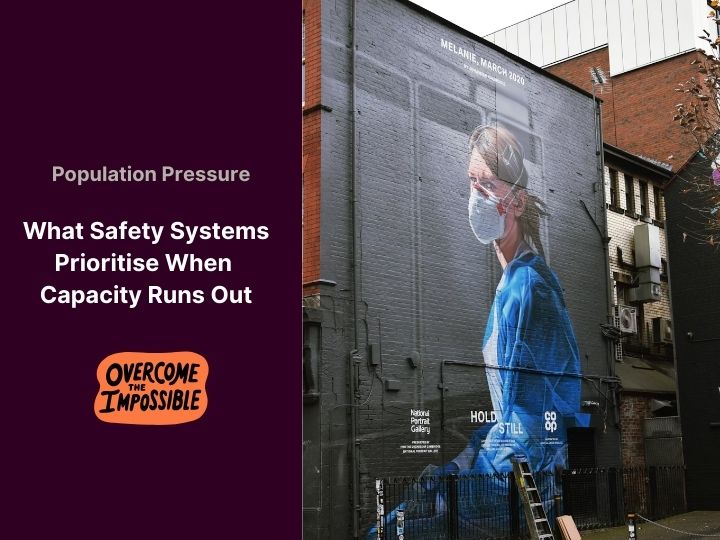
Future observations will examine how population pressure and safety demands interact with lag, and how adoption speed reshapes system durability. Each builds on the same pattern: human systems persist far longer than their designers expect, and understanding why helps us steward them through the gaps between design and reality.