





This article continues a series examining how humanity builds, inherits, and pressures systems over time. It doesn’t argue for reform or predict outcomes. Instead, it observes how systems designed to protect life behave under growth, density, and complexity. For long-term stewards of technology and infrastructure, this sits close to the ground. Safety systems shape trust, social stability, and economic continuity. They also determine where capital must flow, even when nobody wants to discuss it. When capacity holds, protection systems run quietly in the background. When capacity tightens, those same protection systems reveal what they value most. They also reveal what they can no longer guarantee.
What job do protection systems actually do?
Societies build protection systems to reduce preventable death and they also build them to reduce fear. For example; fire services, emergency care, building codes, food standards, and policing all serve that purpose. These systems don’t guarantee safety, but they manage risk within limits. Those limits often stay hidden until demand spikes or something breaks. Protection systems also compete with each other for resources. A city can fund more ambulances, or it can strengthen flood defenses. A government can hire more inspectors, or it can upgrade railway signalling. Every choice shifts risk somewhere else. When population grows, the same risk controls must cover more people, and when density rises, mistakes spread faster. When complexity increases, coordination becomes harder and more expensive.
How does population pressure change the math of safety?
Population growth adds numbers, butit also adds interdependence. People cluster in cities and supply chains get longer and more fragile. Systems link together in tighter loops where failures can cascade. Recent UN data puts the global population around 8.2 billion (2026). Cities now house roughly 45% of people globally, with towns adding another significant share. Urban living now dominates human experience, with the World Bank indicators show the global urban share near the high-50s in recent years. This shift matters for protection systems because dense environments raise baseline exposure to harm. Density increases how often people interact and how closely they live together. That affect puts downward pressure on vital infrastructure, for example population health and infectious disease spreading. It also affects transport infrastructure such as road safety. Or how quickly fires can spread, policing, and emergency call volumes. A small incident can now affect thousands of people within minutes. Population pressure also raises expectations. People refuse to accept risk when they can see safer alternatives elsewhere and they compare services elsewhere (i.e. across borders). Social media and the rise of digital access also turns local failure into visible, shareable failures. All which in turn erodes trust faster.
What happens when protection systems hit capacity limits?
 Every protection system has a capacity envelope. That includes staffing, infrastructure, training, and logistics. It also includes time, which acts as a hard limit you can’t negotiate with. When demand exceeds capacity, systems have to prioritise. They do it through triage, queuing, throttling, and deferral. The system still functions, but it just changes what it serves first and what it delays. Healthcare shows this most clearly because it measures time explicitly. In England, the operational A&E standard remains a four-hour target from arrival to admission, transfer, or discharge. Recent official reporting still tracks how many patients meet that threshold. Independent trackers show large numbers of patients waiting longer than four hours (late 2025). They also report very high numbers of patients waiting over 12 hours after a decision to admit has been made. These figures show what constraint looks like in practice. Those numbers matter for one reason. They show how a life-protection system behaves when it can’t keep up. It doesn’t stop working; it stretches, queues, and slows down. It concentrates effort on the most acute cases and everyone else waits longer. Other sectors follow the same pattern. Emergency dispatch systems put callers in queues. Fire services prioritise life risk over property damage. Police prioritise imminent harm over investigating past crimes. Aviation prioritises safe separation between aircraft over keeping flights on schedule. The system is still working, technically. But it’s working differently than it was designed to work, and at a different capacity than the public expects it to work.
How do strained systems protect themselves?
When capacity tightens, protection systems start protecting themselves. This sounds cynical but it’s often just survival logic. Staff burnout reduces future capacity, so managers add protocols that reduce staff exposure to the worst situations. Legal risk rises during failures, so organisations document everything more carefully. Political scrutiny increases during crises, so leaders centralise decision-making to control the narrative. These actions can improve oversight and control but they can also slow response times. They also push more work onto users, asking them to self-triage or navigate complex systems on their own. You can see this pattern across many sectors. In healthcare, clinicians rely more heavily on referral thresholds and standard pathways. In policing, forces tighten how they grade incoming calls to focus resources. In transport, operators reduce service frequency to improve reliability on remaining services. In emergency planning, agencies narrow their official mission to what they can actually deliver. These aren’t moral failures in most cases. They’re mechanical outcomes from operating under sustained pressure with insufficient capacity.
Why does density turn small failures into cascading ones?
Density fundamentally changes how failure behaves. In sparse settings, a local failure stays local and affects relatively few people. In dense settings, the same failure can cascade across systems and regions. For example:
- Consider transport : A signal fault on a rural rail line delays a handful of trains and inconveniences maybe a few hundred people. The same signal fault on a dense commuter corridor during rush hour can stall an entire regional network. Thousands of people then crowd onto platforms and roads get congested as people seek alternatives. Ambulances get stuck in traffic, delivery trucks miss their windows, work schedules compress, and secondary effects multiply across the system.
- Consider fire safety : A small kitchen fire in a detached rural home threatens one family and maybe their immediate neighbours. The same ignition source in a high-rise apartment building can threaten hundreds of people simultaneously. Building codes try to manage that risk through fire-resistant materials, compartmentation design, and emergency requirements. Yet density keeps raising the stakes and the potential consequences.
- Consider public health : High contact rates in dense populations accelerate how quickly diseases spread. Health systems rely on vaccination coverage, disease surveillance, and public health guidance to manage that risk. In dense societies, delays cost more. Simple timing differences in response can dramatically shift outcomes between contained and widespread.
Complexity increases cascade risk even further. Modern safety systems rely on interconnected networks for communications, electrical power, and data. Those networks now interlock so tightly that losing one can remove multiple independent safeguards simultaneously. The redundancy we think we have? That often disappears faster than we expect. 
What do protection systems prioritise when they’re running out of capacity?
Across different sectors and countries, constrained systems tend to prioritise a remarkably consistent set of goals. These priorities often go unstated in official policy. But you can see them clearly in operational behavior.
Immediate life risk over long-term harm
Systems respond first to visible, acute threats. They do this partly because they can measure them quickly and make clear decisions. They can also justify them publicly without much argument. Emergency care focuses on imminent threats to life. Fire services focus on rescue operations. Police response prioritises violence in progress or imminent danger. This bias makes sense under severe time pressure and limited resources. Long-term harms then get pushed to the back of the queue. Chronic disease management suffers when acute care is overwhelmed. Preventive building inspections get delayed. Criminal investigations stall unless they involve ongoing danger. Infrastructure maintenance gets deferred quarter after quarter. The system isn’t ignoring these issues. It’s just choosing survival today over resilience tomorrow, repeatedly, until the deferred problems become acute problems themselves.
Throughput over quality of service
Constrained systems start optimising for flow and volume. They focus on moving cases through the system faster. They reduce time spent per case, and also reduce handoffs between different teams or departments to speed things up. This isn’t laziness or not caring.It’s queue management. If you spend longer providing higher quality care or service to each individual case, the queue grows faster. Eventually the queue grows so large that the system fails completely and can’t help anyone. Yet optimising for throughput can reduce quality in ways that create problems later. It can increase the need for rework when cases come back because they weren’t fully resolved. The system then burns even more capacity, dealing with recurring unresolved problems.
Standardisation over individual judgment
When demand rises and pressure increases, systems reduce variation and discretion. They implement rules, scripts, decision trees, and rigid thresholds. They do this to keep decisions fast and consistent across different staff members and situations. Standardisation also protects frontline staff. It reduces the moral and emotional burden of making difficult judgment calls under pressure. It also reduces legal exposure when decisions are questioned later. Everything can be justified by pointing to the standard protocol. Yet standardisation frustrates people with edge cases or unusual circumstances that don’t fit neatly into the decision tree. The system becomes less responsive to individual context, which can feel cold or bureaucratic even when staff genuinely want to help.
Protecting the most critical points in the network
In networked systems, some components matter more than others for overall function. A power grid needs stable major substations more than it needs every small transformer. A hospital network needs staffed intensive care wards more than it needs every clinic. A city needs working emergency communications more than it needs every convenience service. Under sustained pressure, systems shift resources toward these critical nodes. They may sacrifice coverage or service quality at the edges of the network. They may also delay upgrades or improvements in less critical areas. This resource prioritisation can look unfair or unequal from the outside, especially if you’re at the edge. It often reflects hard choices about keeping the core network functioning versus trying to maintain everything and risking complete system failure.
Maintaining reputation and public trust
Protection systems run on public trust and cooperation. If trust collapses, compliance falls. People stop following guidance, stop calling for help appropriately, or start taking matters into their own hands. Then actual harm increases even if the system’s technical capacity hasn’t changed. So constrained systems often work hard to protect legitimacy and public confidence. They publish performance targets and metrics. They simplify public messaging. They focus communications on visible successes and improvements. They also avoid making changes that could trigger public fear or panic, even when those changes might improve actual safety. This focus on reputation can help maintain stability and public cooperation during difficult periods. It can also block honest public discussion about real trade-offs and limitations, which can backfire when the gap between messaging and reality becomes too obvious to ignore.
Why does capacity feel tighter now than it used to?
Population scale plays one major role, but it’s not the only factor. Demographics create additional pressure and complexity adds more hidden workload. Many societies now support much older populations than in previous generations. Older age typically increases contact with health services significantly. It also increases discharge complexity, since older patients often need coordinated care pathways across multiple services, not just single-point treatment and release. At the same time, many systems now operate on lean staffing models that were optimised for normal demand conditions. Lean approaches reduce costs during stable periods. They also eliminate buffers and surge capacity that would help during shocks or demand spikes. Technology can help increase capacity and efficiency, but it also raises expectations and reveals more demand. Digital access makes it easier for people to contact services and request help. People also expect faster responses because they experience instant service from technology platforms in their daily lives. The comparison makes slower government or institutional services feel even more frustrating. Complexity adds substantial hidden work that didn’t exist decades ago. Compliance requirements, safeguarding procedures, data protection and reporting, cyber security, and coordination across fragmented systems all add overhead. Each individual requirement might seem reasonable on its own. Together, they consume significant capacity that’s no longer available for direct service delivery.
What signals show a protection system is approaching its limits?
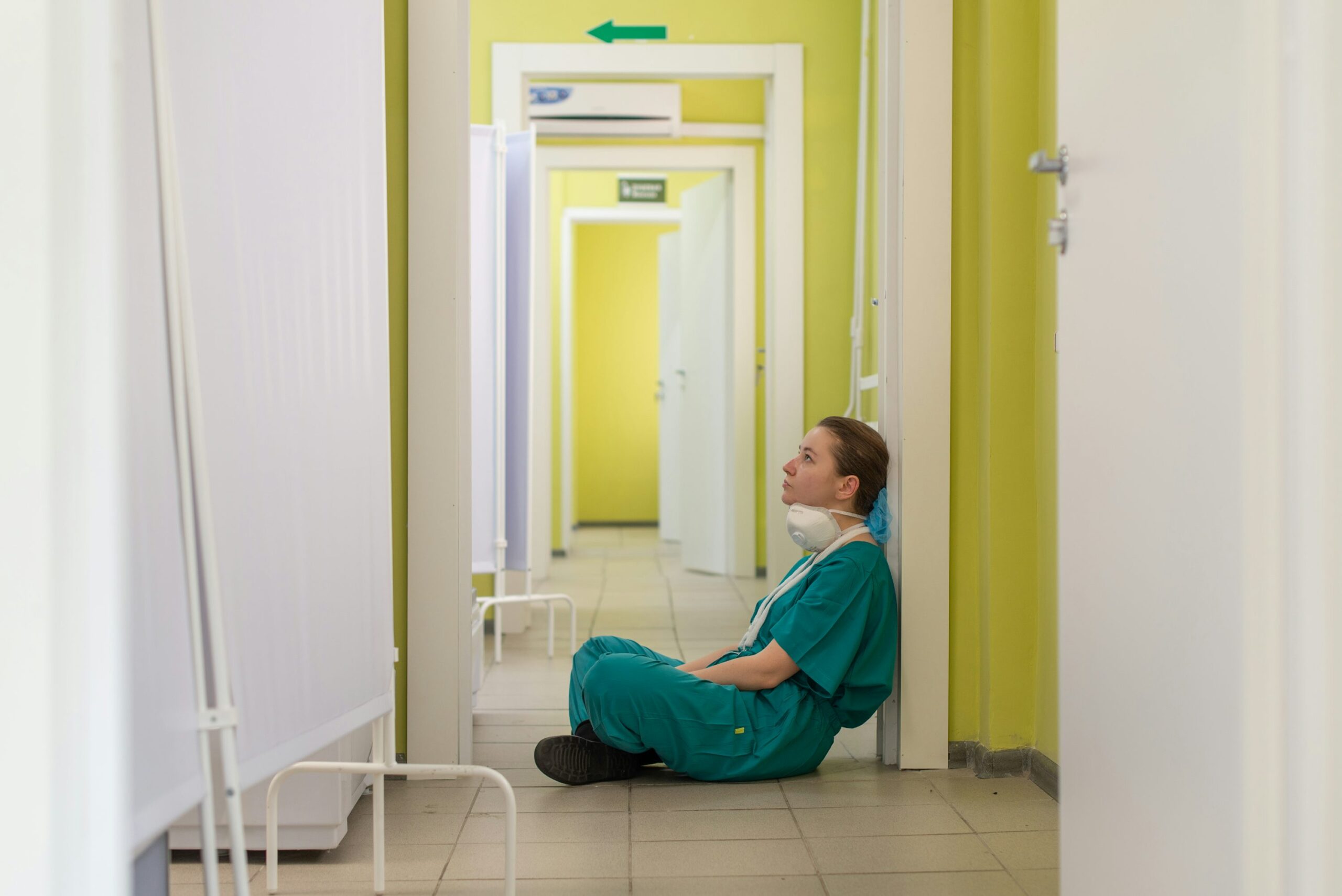 Stewards and observers often look for outright failures or crises. It’s more useful to look for the signals that appear before systems break completely. Growing queues and waiting times offer an early signal. When waiting time increases steadily, it means demand is exceeding throughput consistently, not just during temporary spikes. Informal workarounds created by frontline staff offer another important signal. When people invent unofficial processes or paths around the formal system, it means the formal procedures no longer match operational reality. Rising severity of incidents offers a signal that’s easy to miss. Small problems that used to be caught early now escalate into serious incidents because response arrives later or with fewer resources. Deferred maintenance and delayed upgrades offer another clear signal. When operators consistently postpone renewal or replacement, they’re choosing immediate survival over future resilience. The debt accumulates until something breaks (sometimes badly). Staff turnover and difficulty recruiting offer a signal about sustainability. When experienced people leave faster than they can be replaced, institutional knowledge walks out the door. New staff lack context and judgment that can’t be fully captured in documentation or training manuals. Shifts in public messaging and how targets are framed offer a subtle but important signal. When institutions begin rephrasing performance targets, focusing more on average performance instead of worst-case scenarios, or celebrating maintenance of current levels instead of improvement, it often means they’re managing expectations downward because they can’t meet previous standards.
How should stewards respond when protection systems face sustained pressure?
Stewardship in this context doesn’t require alarm or dramatic intervention. It requires clear-eyed observation and thoughtful response. Population pressure and rising demand don’t mean systems will inevitably collapse. They mean systems will make choices about what to prioritise. Those choices will happen faster than public debate can keep up. They’ll also happen through operational decisions on the ground, not through speeches or policy announcements. For a digital observatory or long-term institutional steward, this creates several practical focal points. First, pay attention to capacity, not just innovation or efficiency. Extra capacity can look wasteful on a financial spreadsheet, but can also save lives and preserve institutional trust during shocks or surge events. Remember that resilience requires buffers. Second, focus resources on resilience at critical network nodes. Redundant communications systems, robust backup power, and reliable logistics reduce cascade risk. When one thing fails, you want other safeguards to still function. Third, think seriously about shaping demand, not just increasing supply. Many protection systems simply cannot scale infinitely no matter how much money you spend. They need upstream prevention, early intervention, and better system design that reduces the load reaching crisis services in the first place. Fourth, invest in system legibility and clear communication. Systems that people can understand produce better voluntary compliance. Better compliance reduces unnecessary load on enforcement and emergency response. It also reduces adversarial behavior where people game the system or work around it. Fifth, treat time as a safety asset that deserves investment. Response time, treatment time, repair time, and recovery time all directly determine outcomes when systems are under pressure. Small improvements in speed can prevent problems from cascading. The people who built these protection systems did so in good faith, trying to protect life with the tools, knowledge, and resources they had available. Current pressure reveals the limits of those designs, not malice or incompetence. This work aims to observe those limits clearly, so stewards can respond with thoughtful care rather than reactive panic or political theatre. Future observations will examine safety systems in highly populated urban environments, where interaction speed and density force even sharper prioritisation decisions. The same underlying principle will hold. Systems reveal their true values through what they choose to protect first when they can’t protect everything equally.