





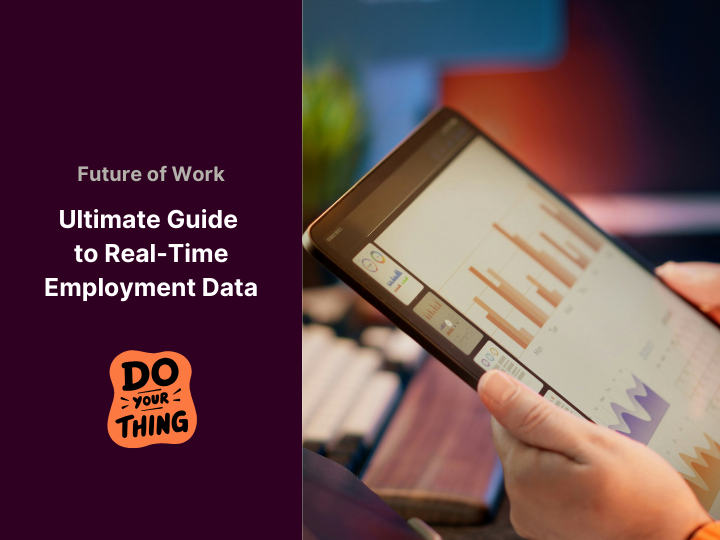
Have you ever wondered how companies stay ahead of the curve in a constantly changing job market? In today’s data-driven world, understanding and tracking real-time employment data can give a business a significant competitive edge. This guide will walk you through the essential strategies and tools you need to make more informed and effective business decisions.
Understanding the Importance of Real-Time Employment Data
Staying current with employment data is crucial for several reasons. It’s not just about filling positions; it’s about understanding market trends, predicting hiring needs, and identifying industry shifts. Real-time data allows companies to adapt their strategies swiftly, ensuring they remain competitive. According to a report by Harvard Business Review Analytic Services, companies that effectively use real-time data are better positioned to improve their decision-making processes. This underscores the fact that the global real-time data analytics market is booming, with a projected value exceeding $55 billion by 2025. 
Tools and Technologies for Tracking Employment Data
Tracking employment data in real time requires the right tools. With technological advancements, businesses now have access to sophisticated software and platforms. Let’s discuss some leading technologies:
Key Tools for Tracking Employment Data
Tracking real-time employment data requires the right technology. Here are some of the leading platforms and solutions:
- Employment Analytics Platforms: Services like LinkedIn Talent Insights and Glassdoor provide deep analytics on hiring trends, workforce demographics, and competitive salary data. For a more tailored approach, businesses can utilise data monitoring services, such as Love the Idea, to track job listings and market trends from specific websites and industries in real-time. HR teams can use these insights to fine-tune their recruitment strategies.
- Cloud-Based Data Warehousing: Solutions such as Google BigQuery and Amazon Redshift allow for the storage and analysis of vast amounts of employment data. These scalable cloud services ensure businesses can access the data they need without delay.The trend toward cloud migration is undeniable. According to recent reports, over 80% of organisations are currently using a hybrid or multi-cloud strategy for their data. A key driver for this is the need for greater flexibility and scalability that cloud databases offer.
Industry-Specific Employment Data Tracking
Different industries have unique challenges and demands, meaning employment tracking needs to be tailored. Let’s explore a few examples:
- Technology Sector: The tech industry is ever-changing, with new roles emerging constantly. Real-time data tracking in this sector involves monitoring skills demand, salary benchmarks, and emerging job titles.
- Healthcare Industry: The healthcare sector depends on real-time data to address staffing shortages and predict patient care demands. Platforms that track employment trends in healthcare can help organisations anticipate training needs, ensuring that staff meet the required expertise levels. In fact, a study by McKinsey & Company found that real-time patient flow analytics can help hospitals improve operational efficiency by up to 30%, leading to better patient care.

Challenges and Solutions in Real-Time Data Tracking
While access to real-time employment data presents opportunities, it also comes with certain challenges. Data overload can lead to analysis paralysis, where decision-makers are unable to take action due to excessive information. Employing analytics tools that streamline data presentation can help. Another challenge is ensuring data accuracy. Inaccurate data can lead to misguided strategies. Regular data audits and working with trusted data sources can mitigate this risk. A report by IBM found that companies lose $3.1 trillion annually due to poor data quality, highlighting the importance of getting it right.
The Future of Employment Data Tracking
As technology evolves, so too will employment data tracking. Trends suggest a move towards more predictive analytics, where businesses will not only track current employment trends but also forecast future ones. Artificial Intelligence (AI) will play a pivotal role, providing deep insights and more accurate predictions than ever before. In fact, recent studies have shown that AI models can predict employee turnover with up to 85% accuracy, allowing for proactive retention strategies.
Ready for the Future? Your Data-Driven Advantage
Moreover, using real-time employment data gives businesses a competitive edge. By adopting new technologies and preparing for an AI-driven future, companies can transform how they attract and retain talent—staying adaptive, resilient, and ahead of the curve.