





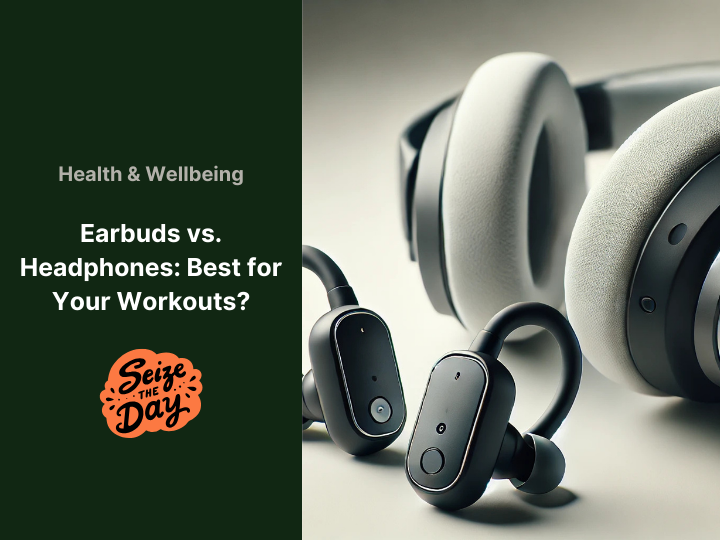
Are you tired of dealing with frustrating audio experiences during workouts? Whether it’s tangled wires or uncomfortable fits, your choice of audio gear can impact your fitness routine and motivation. But which is better for workouts—smart earbuds or headphones? In this guide, we’ll explore the pros and cons of both options, backed by expert opinions and the latest stats. By the end, you’ll have the insights you need to make the best decision for your fitness audio experience.
Why Smart Earbuds Often Make Sense for High-Movement Workouts
1. Portability Leads to Fewer Workout Barriers
Earbuds are compact and lightweight, which can reduce the friction of getting started. For example, runners or those doing circuit-style training need gear that doesn’t require setup or adjustment mid-workout. When the gear is simple and portable, it’s more likely to be used consistently for supporting the behavioural science principle of lowering the activation energy for habit formation (Fogg, 2009). A 2022 Statista survey of fitness device users found that 78% of active individuals preferred earbuds for their portability and secure fit, especially in cardio-heavy routines like running or HIIT.
2. Built-In Smart Features Can Support (or Distract From) Health Goals
Some earbuds offer real-time metrics such as heart rate, step counts, or VO₂ max estimates. In theory, this feedback loop allows users to adjust effort levels in real-time. But the effectiveness depends on how the data is used. For instance, a runner with a heart condition might use heart rate tracking to avoid overexertion. However, if data is poorly explained or prompts anxiety, it can lead to counterproductive behaviour—like training through fatigue just to “hit the numbers.” Without thoughtful use, the tech can undermine wellbeing. A 2021 research paper published in the Journal of Medical Internet Research emphasized the need for “interpretability and actionable feedback” in wearables, noting that passive tracking alone does not improve health outcomes.
3. Wireless Freedom Reduces the Risk of Injury and Frustration
Cables can be distracting or even hazardous during movement. Bluetooth-enabled earbuds eliminate this risk and improve freedom of motion. This is particularly relevant in workouts that involve sudden or multidirectional movement (e.g., CrossFit or dance-based routines), where a dangling wire might tug or catch.  Keep in mind wireless freedom is useful but only if the earbuds maintain a stable connection. Poor-quality Bluetooth gear can introduce audio dropouts, disrupting rhythm and focus mid-session. **
When Headphones Offer a More Stable or Immersive Experience
1. Superior Sound Quality May Improve Focus But Only in Certain Settings
Over-ear headphones often offer deeper bass and clearer sound separation. Stationary workouts like weightlifting, rowing, or indoor cycling, can foster deeper concentration by minimizing external distractions. Music tempo and mood have also been shown to influence perceived effort and endurance (Karageorghis & Priest, 2012). For example, A lifter who uses noise-cancelling headphones to block ambient gym noise may maintain better form due to fewer distractions leading to safer and more productive workouts. However, in high-mobility environments (outdoor running or group fitness), that same isolation could become a safety risk. Blocking ambient sound entirely means missing environmental cues, such as traffic or verbal instructions.
2. Larger Battery Capacity Enables Longer Sessions With Fewer Interruptions
One technical advantage of headphones is battery size. They often offer 25–40 hours of playback on a single charge, compared to many earbuds that top out at 6–8 hours of active use (excluding case recharging). For those who work out multiple times per day—or forget to charge devices regularly—this difference reduces disruptions.
3. Noise Cancellation Can Improve or Impair Safety, Depending on Use
High-quality headphones often include active noise cancellation (ANC), which can improve mental focus—especially in busy gyms or shared spaces. However, as with earbuds, ANC must be used responsibly. In outdoor or social workout settings, complete isolation can reduce situational awareness, increasing the risk of accidents or missed instructions.  Some newer models include ambient or “transparency” modes, allowing selective sound passthrough—a practical middle ground for maintaining awareness without giving up immersive audio. **
Smart Tech Isn’t Always Smart for Everyone: Limitations and Considerations
Smart Earbuds – Potential Downsides
- Battery Life: Smaller form factor means shorter active use time.
- Fit Issues: Not all earbud designs accommodate all ear shapes, leading to discomfort or risk of falling out.
- Data Overload: Health-tracking features may distract or overwhelm users not trained in interpreting biometric data.
Headphones – Key Trade-offs
- Bulk and Heat: Large ear cups can feel heavy or warm during long sessions.
- Less Ideal for Movement: They may shift or slip during jumping or jogging, requiring adjustments that interrupt flow.
- Sweat Sensitivity: Not all headphones are designed with moisture resistance in mind, leading to potential long-term damage.
Choosing What Works: A Decision-Making Framework
Rather than defaulting to what’s popular, think about the following factors: 1. Workout Type
- Cardio, HIIT, and dynamic movement: Prioritise lightweight and secure-fitting earbuds.
- Stationary strength training or yoga: Consider headphones for sound immersion and extended wear.
2. Environment
- Outdoor workouts: Choose gear with ambient sound modes or awareness features.
- Indoor environments: ANC may enhance focus without compromising safety.
3. Use of Tech Features
- Want to track health metrics? Smart earbuds with integrated sensors may help—but only if you understand how to use that data constructively.
- Prefer simplicity? Look for durable models with minimal interface complexity. Tip: When evaluating new gear, don’t just ask what it can do, ask what you’ll actually use, and how it aligns with your real habits and needs.
It’s Not Just About Gear. It’s About Intentional Use
In the age of smart tech, it’s easy to assume that more features equal better outcomes. But the real value comes not from the devices themselves, but from how well they integrate into your existing behaviour and goals. Whether you choose earbuds or headphones, the most important question isn’t “What’s the best product?” but rather, “What kind of relationship do I want with my tech?” Are you using it to deepen your self-awareness and support sustainable fitness habits? Or are you chasing numbers without context? By thinking critically about your gear and how it influences your focus, motivation, and even your safety, you can make more intentional, more human-centred choices.