





This article sits within a wider body of work that examines how humanity builds, inherits, and stresses-test digital systems over time. It does not argue for change, promote a particular belief, or seek agreement. Instead, it records observable patterns in how systems persist, transfer, and resist alteration across generations. From our (LTI) standpoint, this matters. Long-term stewardship depends less on novelty and more on understanding what already exists, how it arrived, and why it continues. Technology, infrastructure, and governance all carry histories embedded in their design. Each generation receives those systems largely intact, often without meaningful consent, yet remains responsible for their operation and consequences. Let’s now take some time to focuses on intergenerational inheritance of systems. Observing how political, economic, technical, and social structures pass forward. How do they accumulate assumptions, and how stress appears when reality shifts faster than the system design does? Our aim is simple: observe the mechanics before forming opinions.
We are born into a world of pre-existing systems.
No generation starts with a blank page. Children today are born into societies with laws, markets, technologies, and norms already formed. Those systems shape behaviour long before individuals gain agency or awareness. For example; education systems set expectations, transport networks define movement, financial structures influence risk tolerance. Each element existed before any current participant is fully aware of it. This inheritance rarely feels like a privilege. Systems often appear as background conditions rather than deliberate constructs. Yet every rule, interface, and workflow reflects decisions made by earlier groups, under different pressures and assumptions. Over time, the original rationale fades, while the structure remains.  Political systems offer a clear example. Parliamentary rules, voting mechanisms, and administrative decision-making-layers go back back decades or centuries. Designers aimed to solve problems relevant at the time. Later generations inherit the outputs without inheriting the debates or conditions that shaped them. And as a result, friction grows when modern demands clash with older design limits. The same pattern appears in technology. Core internet protocols still rely on standards set in the 1970s and 1980s. Engineers built them for resilience and openness, seemingly unaware of a future of global surveillance or commercial dominance. Modern platforms now stretch those protocols far beyond their original scope, yet replacement remains difficult due to scale and dependency.
##
Who owns and is accountable for these inherited systems?
Intergenerational transfer creates a separation between authorship and accountability. Let’s try to understand thisdiffuses across time.
- One group designs a system.
- Another group operates it.
- A third group absorbs the consequences.
This gap complicates reform and system change, since responsibility diffuses across time. In infrastructure, this becomes visible through maintenance cycles. Bridges, power grids, and water systems often exceed their intended lifespan. Governments and operators defer upgrades due to cost, political cycles, or disruption risk. Later generations then manage ageing assets under higher load. Data from the UK National Infrastructure Commission shows that, in this current generation, many critical assets now operate beyond original design life. Water mains are over 40 years old on average, not great when you think about drinking water. Some electricity infrastructure dates back to the post WWII. These systems still function, yet accountability with reliance often declines gradually rather than abruptly. And back to digital systems. They follow a similar path; software platforms accumulate layers of patches, integrations, and workarounds. Each addition solves an immediate need. Over time, complexity increases, and clarity decreases. New teams inherit codebases they did not write, often without full documentation. Risk rises quietly.
##
What are the visible signs a system is under strain?
System lag emerges when external conditions shift faster than system adaptation. Population growth, urban density, climate stress, and technological acceleration all contribute. Systems designed for lower throughput begin to strain under volume. Transport illustrates this effect perfectly. In the past, cities grew around rail and road networks designed for smaller populations. As populations increased, congestion followed. Authorities introduced incremental fixes rather than full redesigns, due to cost and disruption. Obviously over time, bottlenecks appeared, people had to live further afield, and average commute times increased. Which meant a reducing of productivity and quality of life. 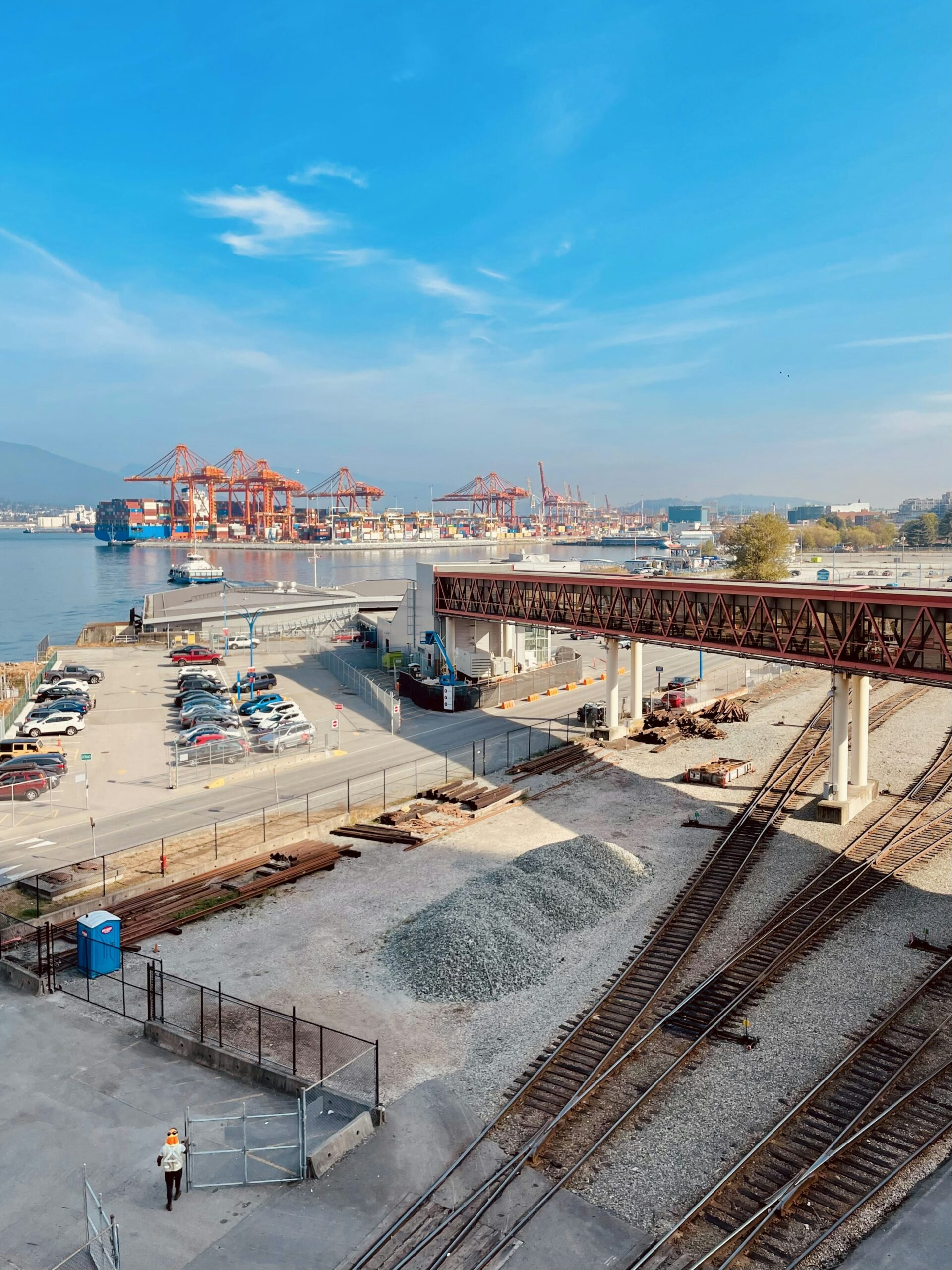 Healthcare systems face similar pressure with life expectancy improvements increase demand for long-term care. Previous funding models based on earlier demographic ratios struggle to keep pace, and staff shortages reflect not just training gaps, but system design mismatches. Technology adoption can accelerate lag rather than resolve it. Digital tools increase speed and reach, yet they often sit on top of existing processes. Without redesign, automation amplifies system strain (inefficiency). Many organisations jumped to digitise paperwork rather than rethink workflows. The result feels modern but behaves old. Instead of lots of filing cabinets we now have huge data centres with little to no thought about deleting files (shredding old bills).
##
What about the systems that survive and are efficient?
Systems that endure often do so because they solved fundamental coordination problems. Property rights, contract law, timekeeping standards, and communication protocols persist due to broad utility. Once embedded, replacement costs outweigh inefficiencies. Durability creates stability, which societies value. Predictable systems enable planning, investment, and trust. Yet durability also protects outdated views, decision making, and assumptions. When change arrives, resistance is built-in. So what made the system stable now makes it rigid. Consider financial clearing systems. Many still rely on batch processing and settlement delays measured in days. Designers prioritised accuracy and reconciliation over speed. But in today’s era, modern expectations is accustomed to real-time transactions. Transition remains slow due to risk, regulation, and global coordination requirements ( the layers of system and not the lack of innovation). Legal systems behave similarly. Detailed reasoning promotes long-thinking and consistency, yet it slows adaptation. Courts often interpret new technologies through an old lens; the old system behaving the same but done in a new way. This preserves continuity and durability which again societies value. But also means it’s slow to react and introduces loop holes (unaddressed security holes and backdoors for the technical readers). Legislators then respond with incremental amendments rather than structural re-thinking.
Why are system design limits apparent and obvious to people?
Population scale acts as a multiplier on system stress.A small inefficiency becomes significant when applied to millions with minor delays compound across networks. As population and usage increase, running costs rise; but so does fragility. Airspace demonstrates this clearly. Early aviation systems handled limited traffic; today our skies carry thousands of flights every hour. Controllers rely on strict procedural discipline because even small disruption can cascade quickly across regions. A single delayed flight can trigger delays for multiple interconnecting flights across different countries. Digital platforms experience the same dynamics. Social networks scale communication but also amplify harmful content. Content moderation designed for small communities often break at global scale and automated enforcement introduces errors; human review can’t keep pace.  Population pressure affects company governance too. Decision-making slows as stakeholder numbers rise with consensus becomes harder to reach. To cope, organisations automate decisions with fixed rules. This speeds things up but removes room for judgment or adaptation. Rigid rules that handle volume also struggle with exceptions or changing circumstances.
Are human constraints is baked into technology?
Technical progress doesn’t erase human constraints, it just reveals them more clearly. Systems still run on incentives, power dynamics, and trust boundaries. Technology amplifies these factors rather than removing them. Take cloud computing. It centralised resources while reducing ownership, accountable and access. Costs shifted, but the dependencies stayed, just in new forms. Platform owners gained more leverage whilst users got convenience. We’ve seen this pattern before with earlier utilities like electricity and telephones. Data governance shares the same pattern. For example, collecting data is easy, it scales almost automatically. But managing that data responsibly? That’s hard and doesn’t scale nearly as well. Regulations like GDPR try to rebalance power between companies and users, but enforcement can’t keep up with how fast technology moves. By the time regulators catch up to one practice, companies have already moved on to the next. Organisations in response to regulations just bolted compliance processes onto whatever systems they already had, rather than redesigning or rethinking it from the ground up. Over time, with the layers upon layers of accumulated complexity, each new technology wave; mainframes, then client-server, then the web, then mobile, then cloud infrastructure, now AI. It continues. to add new requirements, standards, and processes. But the old ones rarely get removed, they just get buried. The result? Future generations won’t and don’t inherit clean or stress-free systems. They inherit archaeological digs. Stacks of technology and process built over decades, where nobody fully understands why certain things exist or whether they’re still needed.
Why does system reform ofter feel slow?
Systems only change when enough people agree they need to. But that agreement rarely happens all at once or evenly. Some groups feel the pain of broken systems early and push for reform. Others are doing fine (or even benefiting from the status quo) so they resist change. This uneven experience slows down any collective action. Economic systems demonstrate this perfectly. If you already own assets: property, stocks, or an established business, you typically want stability. And to hopefully keep things predictable. But if you’re trying to break in as a new competitor or entrepreneur, you want flexibility and openness. Policy that try to balance these competing interests usually end up satisfying neither group completely. The result is incremental tweaks rather than meaningful reform. Institutional memory complicates this further. Organisations forget the original reasons rules were even created or the specific problems they solved. The context that made them necessary often departs with the decision makers and teams that implemented them. But they remember being told those rules were important so they keep them, just in case. As a business grow larger, this risk aversion intensifies. Leaders choose the safety of continuity over the uncertainty of experimentation, even when the current approach isn’t fully understood. Or something even working. Technology teams face the exact same pattern. Legacy systems feel too risky to touch. One wrong move could break everything and bring the house of cards down. So teams route around them. They build new features on top, integrate carefully at the edges, create workarounds. Meanwhile, the core system becomes more entangled, more critical, and harder to understand. Each year that passes makes replacement feel more dangerous, not less. Eventually, “we can’t change this” becomes accepted truth, even when the system is actively causing problems.
How to better manage systems across generations?
Managing systems across generations begins with restraint rather than ambition. No generation designs the starting conditions it inherits. Legal frameworks, infrastructure, institutions, and technologies arrive already formed, carrying decisions made under different constraints and assumptions. Long-term stewardship therefore starts with humility: an acceptance that responsibility does not imply authorship, and that improvement often means care rather than reinvention. Good stewardship prioritises continuity. For example: maintenance, documentation, and incremental renewal matter more than novelty. Systems fail more often from slow neglect, loss of context, lack of ownership, and accumulated misunderstanding. Preserving institutional memory (why something exists, what problem it once solved, and where limits lie) becomes as important as changing the system itself.  This requires mature discernment as not all systems should be treated equally. Some structures earn preservation because they provide stability, trust, and coordination at scale. Others persist only because replacement feels risky or costly. The challenge is distinguishing stability from stagnation. That distinction cannot be made through short-term ideology or preference. It emerges through continued observation of how systems behave under current conditions. Long-horizon stewards are often better positioned to make these judgements. System observatories, family offices, foundations, and custodial entities operate beyond electoral cycles and quarterly reporting pressures. Their exposure and research also spans multiple domains: capital, infrastructure, governance, and technology. This allows patterns to be seen that shorter-term providers may miss. This perspective supports patience, particularly where reform requires years rather than months. Importantly, stewardship does not aim for optimisation or perfection. It aims for legibility and accountability. Clear ownership, transparent incentives, and well-documented intent reduce fragility over time. Systems that can be understood are easier to maintain, adapt, or responsibly retire. Small improvements compound over time, not through scale, but through reduced burden and clear accountability on those who inherit the system next. Good faith underpins this work. The starting assumption is not that human systems are fundamentally broken, nor that decline is inevitable. It is that, continuity under pressure is the normal state of human organisation. Systems endure because people continue to operate them, repair them, and work around their limits. Understanding how inheritance shapes responsibility enables better care , even when meaningful change remains slow and constrained.