



This article continues a series examining how humanity builds, inherits, and preserves systems over time. It does not explore belief, spirituality, or futurism. Instead, it observes how humans attempt to preserve awareness, systems of identity, and meaning across generations, and how those efforts are translated into systems, narratives, and structures that remain with us today. Human beings are uniquely aware that time passes and that we exist within it temporarily. This awareness shapes almost everything we build. We know with absolute certainty that individuals die, that memories fade and become unreliable, and that cultures shift in ways that can make the recent past feel utterly foreign. In response to this knowledge, we build elaborate systems intended to preserve something meaningful beyond any individual lifespan: identity, meaning, values, patterns of thought, or simply continuity itself. This preservation impulse appears everywhere throughout human history, regardless of specific era, geography, or belief system. Languages get standardised through written grammars and dictionaries. Laws get written down and codified rather than remaining purely customary. Important stories get repeated, refined, and eventually recorded. Buildings get maintained and restored long after their original purpose has disappeared or changed beyond recognition. Digital systems now attempt exactly the same fundamental task, just at vastly greater speed and scale than previous technologies allowed. These preservation efforts aren’t driven primarily by optimism about the future or belief in inevitable progress. They’re driven by acute awareness of loss, of how much gets forgotten, and of how quickly meaning can disappear when it’s not actively maintained.
Why do we build systems to preserve meaning against entropy?
Preservation systems represent human attempts to stabilise meaning and continuity against the natural entropy that erodes everything over time. They don’t stop change from happening, that would be impossible. But they attempt to slow distortion and drift so continuity can feel real and meaningful across multiple generations, creating bridges between past and future that wouldn’t otherwise exist. At the most fundamental level, continuity is biological. DNA carries genetic patterns and physical structures across generations, but it doesn’t carry experience, knowledge, or culture. Each new generation inherits biological structure but not memory, understanding, or learned wisdom. Human preservation systems arise specifically to bridge that gap, carrying forward narratives, social norms, technical knowledge, and shared understanding through mechanisms that biology alone cannot provide. Religion, formal education, governance structures, archives and libraries, cultural rituals and ceremonies, and now digital platforms and databases all perform variations of the same core function. They externalise awareness and knowledge so it can survive beyond the limited lifespan of any single participant. They create continuity where biology provides only repetition. 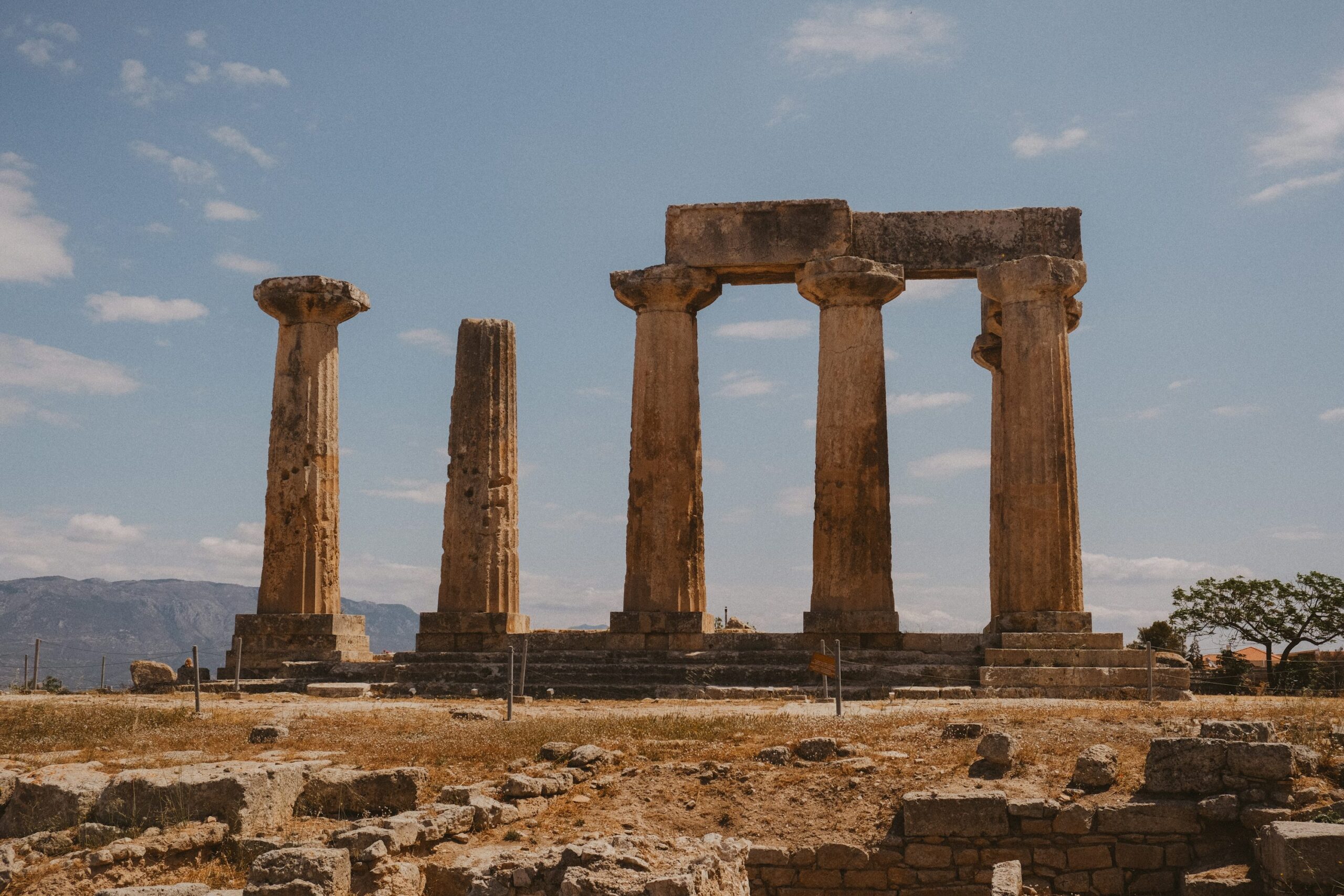
What gets preserved and what gets lost in these systems?
These preservation systems don’t capture everything equally. They preserve very selectively based on what can actually be formalised, recorded in stable media, or reliably repeated across contexts and people. Subjective personal experience, emotional nuance and texture, individual interpretation and private meaning all get systematically filtered out in favour of patterns that can be standardised and transmitted consistently. What ultimately survives through preservation systems isn’t lived awareness or the full richness of human experience. It’s encoded meaning, stripped down to elements that can be written, taught, or otherwise transferred in standardised forms. The internal experience that originally gave those meanings their weight and significance mostly disappears. This distinction between lived experience and preserved meaning matters enormously for understanding how continuity actually works. Preservation systems transmit structure, not consciousness. They successfully carry forward rules, stories, symbols, and procedures. But they don’t and can’t transmit the internal subjective experience that originally animated those forms and made them meaningful to the people who created them. Over time, this gap between preserved form and lost experience causes preserved meaning to drift steadily away from lived reality. The words stay the same but mean something different. The rituals continue but serve different purposes. Eventually this drift becomes large enough that preserved meanings require active reinterpretation to remain relevant, or fundamental reform to reconnect with contemporary experience.
How does scale change what preservation can accomplish?
As preservation systems increase in scale and reach, what gets preserved necessarily becomes more abstract and further removed from direct experience. This progression happens in fairly predictable stages that we can trace historically. Oral tradition, where knowledge lives in human memory and spoken transmission, becomes written text that can be copied and distributed beyond immediate social networks. Written text becomes structured data that can be searched, cross-referenced, and analysed by machines. Data becomes automated reference systems where algorithms surface relevant information without human curation or interpretation. Each step in this progression toward greater scale improves durability and reach dramatically. Information becomes harder to lose completely , easier to access from anywhere, and less dependent on specific people maintaining it. But each step also reduces contextual richness, nuance, and connection to the circumstances that originally created the knowledge. The continuity of information across time and distance strengthens with each technological advance. But the shared awareness of what that information means, how to interpret it properly, and why it matters in the first place gets progressively thinner. More people can access the same information while understanding it in increasingly different ways.
Is this loss of context actually a failure of preservation?
This trade-off between durability and contextual richness isn’t a failure of preservation systems or a problem that better technology could solve. It’s inherent in the fundamental challenge of preserving meaning across time and transmitting it across people and contexts. Meaning that cannot be reduced to stable, transmissible patterns simply cannot scale beyond small groups with shared direct experience. You can preserve rich contextual meaning within a family or small community through social traditions and shared life. But that approach doesn’t extend to millions of people or persist reliably across centuries. Similarly, awareness and understanding that cannot be externalised into language, symbols, or other shareable forms cannot persist beyond the individuals who hold it. When those people die, that knowledge dies with them unless it was somehow captured in forms others can access and learn from. Preservation at scale requires standardisation and abstraction. That’s not a design flaw. It’s the inherent nature of the challenge. 
Why does modern society face this tension so visibly?
Contemporary society confronts the paradox of preservation more acutely and visibly than any previous era in human history, largely because of the unprecedented capabilities of digital technology. Digital systems offer something approaching perfect preservation of information. Text, images, audio, video, and data can be stored indefinitely with essentially no degradation, copied infinitely at near-zero cost, and accessed globally almost instantly. From a pure information standpoint, we’ve solved problems that challenged humanity for millennia. Yet these same digital systems have accelerated the fragmentation and loss of shared interpretation to an extraordinary degree. Information survives and proliferates endlessly. But common understanding of what that information means, how to evaluate it, what context matters for interpreting it, and even basic agreement on shared facts fragments more rapidly than ever before. We can preserve everything but agree on almost nothing. Every conversation, every document, every moment can be recorded and retrieved. But the shared frameworks for making sense of all that preserved information have broken down in ways that previous generations didn’t experience because they had less information but more interpretive consensus. The result is a genuine paradox that would have seemed impossible to previous eras. Humanity has never been better at preserving records and information. And humanity has never been less aligned on what those meticulously preserved records actually mean or how they should inform present understanding and future action.
How should we understand awareness and continuity in preservation systems?
Given these inherent limitations and trade-offs, awareness, continuity, and preservation cannot be understood as endpoints or final achievements that get completed and then simply maintained. They’re better understood as ongoing negotiations and active processes that each generation must engage with. These negotiations happen between what can realistically be carried forward in stable forms versus what must inevitably be relearned, rediscovered, or reinvented by each generation based on their own direct experience. No system, no matter how sophisticated, can fully bridge that gap or eliminate the need for each generation to do its own work of meaning-making. Human preservation systems don’t and cannot preserve life itself, consciousness, or lived experience directly. What they preserve is more like scaffolding or skeletal structure. They maintain frameworks, patterns, rules, stories, and symbols that previous generations built and refined. The hope embedded in all preservation efforts is that future participants will be able to reconstruct living meaning within the structures that got left behind. The preserved forms provide starting points, constraints, and resources that make it easier to rebuild understanding than starting from nothing. But the actual work of making preserved meaning come alive and feel real has to happen again in each generation, by people living in their own present moment. This is perhaps the deepest truth about preservation and continuity. What gets preserved is never the thing itself. It’s always a representation, a encoding, a trace that requires active interpretation and reconstruction to become meaningful again. The preservation succeeds not when it captures everything perfectly, but when it provides enough structure that future generations can find their way back to meanings that still matter, even as the specific forms and contexts that originally created those meanings have disappeared.